Abraham Colles
Irish surgeon and anatomist
Abraham Colles (23 July 1773 – 16 November 1843) was a prominent Irish surgeon and anatomist, best known for his work on the fracture of the distal radius, which is now known as Colles' fracture. He was a significant figure in the field of surgery and made substantial contributions to medical education and practice in Ireland.
Early life and education
Abraham Colles was born in Kilkenny, Ireland, in 1773. He was the son of William Colles, a successful merchant and manufacturer. Colles showed an early interest in medicine and pursued his studies at Trinity College Dublin, where he graduated with a Bachelor of Arts degree in 1795. He then went on to study medicine at the Royal College of Surgeons in Ireland (RCSI).
In 1796, Colles traveled to Edinburgh to further his medical education, where he studied under the renowned surgeon John Bell. He also spent time in London, where he was influenced by the work of John Hunter, a pioneer in surgical techniques and anatomical research.
Career
Upon returning to Dublin in 1799, Colles was appointed as a surgeon at Steevens' Hospital, one of the leading medical institutions in Ireland at the time. He quickly gained a reputation for his skill and expertise in surgery. In 1804, he was appointed as a professor of anatomy, surgery, and physiology at the RCSI, a position he held for over 30 years.
Colles was known for his innovative teaching methods and his ability to communicate complex medical concepts to his students. He emphasized the importance of practical experience and hands-on training in surgical education.
Contributions to medicine
Colles made several important contributions to the field of medicine, particularly in the areas of surgery and anatomy. His most famous contribution is the description of the fracture of the distal radius, which he first published in 1814. This injury, now known as Colles' fracture, is a common type of fracture that occurs near the wrist and is often seen in older adults.
In addition to his work on fractures, Colles also made significant contributions to the understanding of syphilis. He described what is now known as Colles' law, which states that a mother who has given birth to a child with congenital syphilis is immune to the disease, even if she shows no symptoms herself.
Colles was also involved in the development of surgical techniques and was one of the first to advocate for the use of ligatures to control bleeding during surgery. His work laid the foundation for many modern surgical practices.
Legacy
Abraham Colles is remembered as one of the most influential figures in Irish medical history. His teachings and writings have had a lasting impact on the field of surgery, and his name is still associated with the fracture he described. Colles' dedication to medical education and his contributions to surgical practice have made him a respected figure in the history of medicine.
Related pages
Gallery
-
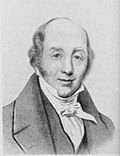 Portrait of Abraham Colles
 -
 Indenture of Abraham Colles, 1790


Ad. Transform your life with W8MD's Budget GLP-1 injections from $49.99


W8MD offers a medical weight loss program to lose weight in Philadelphia. Our physician-supervised medical weight loss provides:
- Weight loss injections in NYC (generic and brand names):
- Zepbound / Mounjaro, Wegovy / Ozempic, Saxenda
- Most insurances accepted or discounted self-pay rates. We will obtain insurance prior authorizations if needed.
- Generic GLP1 weight loss injections from $49.99 for the starting dose of Semaglutide and $65.00 for Tirzepatide.
- Also offer prescription weight loss medications including Phentermine, Qsymia, Diethylpropion, Contrave etc.
NYC weight loss doctor appointmentsNYC weight loss doctor appointments
Start your NYC weight loss journey today at our NYC medical weight loss and Philadelphia medical weight loss clinics.
- Call 718-946-5500 to lose weight in NYC or for medical weight loss in Philadelphia 215-676-2334.
- Tags:NYC medical weight loss, Philadelphia lose weight Zepbound NYC, Budget GLP1 weight loss injections, Wegovy Philadelphia, Wegovy NYC, Philadelphia medical weight loss, Brookly weight loss and Wegovy NYC


|
WikiMD's Wellness Encyclopedia |
| Let Food Be Thy Medicine Medicine Thy Food - Hippocrates |
Medical Disclaimer: WikiMD is not a substitute for professional medical advice. The information on WikiMD is provided as an information resource only, may be incorrect, outdated or misleading, and is not to be used or relied on for any diagnostic or treatment purposes. Please consult your health care provider before making any healthcare decisions or for guidance about a specific medical condition. WikiMD expressly disclaims responsibility, and shall have no liability, for any damages, loss, injury, or liability whatsoever suffered as a result of your reliance on the information contained in this site. By visiting this site you agree to the foregoing terms and conditions, which may from time to time be changed or supplemented by WikiMD. If you do not agree to the foregoing terms and conditions, you should not enter or use this site. See full disclaimer.
Credits:Most images are courtesy of Wikimedia commons, and templates, categories Wikipedia, licensed under CC BY SA or similar.
Translate this page: - East Asian
中文,
日本,
한국어,
South Asian
हिन्दी,
தமிழ்,
తెలుగు,
Urdu,
ಕನ್ನಡ,
Southeast Asian
Indonesian,
Vietnamese,
Thai,
မြန်မာဘာသာ,
বাংলা
European
español,
Deutsch,
français,
Greek,
português do Brasil,
polski,
română,
русский,
Nederlands,
norsk,
svenska,
suomi,
Italian
Middle Eastern & African
عربى,
Turkish,
Persian,
Hebrew,
Afrikaans,
isiZulu,
Kiswahili,
Other
Bulgarian,
Hungarian,
Czech,
Swedish,
മലയാളം,
मराठी,
ਪੰਜਾਬੀ,
ગુજરાતી,
Portuguese,
Ukrainian
