3D printing
3D Printing
3D printing, also known as additive manufacturing, is a process of creating three-dimensional objects from a digital file. The creation of a 3D printed object is achieved using additive processes, where successive layers of material are laid down in different shapes. 3D printing is the opposite of subtractive manufacturing, which involves cutting out/hollowing out a piece of metal or plastic with, for example, a milling machine.
History
The concept of 3D printing has been around since the 1980s. The first working 3D printer was created by Chuck Hull of 3D Systems Corp in 1984. Hull invented the stereolithography (SLA) process, a method that allows designers to create 3D models using digital data, which can then be used to create a physical object.
Technologies
3D printing technologies are diverse and include several methods:
- Fused Deposition Modeling (FDM): This is the most common 3D printing technology used by hobbyists. It involves melting a plastic filament and extruding it layer by layer to build an object.
- Stereolithography (SLA): This method uses a laser to cure liquid resin into hardened plastic in a layer-by-layer fashion.
- Selective Laser Sintering (SLS): This technique uses a laser to sinter powdered material, binding it together to create a solid structure.
- Digital Light Processing (DLP): Similar to SLA, but uses a digital light projector screen to flash a single image of each layer all at once.
Applications
3D printing has a wide range of applications across various industries:
- Medical: 3D printing is used to create prosthetics, dental implants, and even bioprinting of tissues and organs.
- Aerospace: The technology is used to produce lightweight parts for aircraft and spacecraft.
- Automotive: Car manufacturers use 3D printing for prototyping and producing parts.
- Fashion: Designers use 3D printing to create innovative clothing and accessories.
- Construction: Large-scale 3D printers are used to build houses and bridges.
Advantages
3D printing offers several advantages over traditional manufacturing methods:
- Customization: Objects can be easily customized to meet specific needs.
- Complexity: Complex designs that are difficult to achieve with traditional methods can be easily printed.
- Speed: Prototyping is faster, allowing for rapid iteration and development.
- Cost: Reduces waste and can be more cost-effective for small production runs.
Challenges
Despite its advantages, 3D printing faces several challenges:
- Material Limitations: The range of materials that can be used is still limited compared to traditional manufacturing.
- Speed: While faster than some methods, 3D printing can still be slow for large-scale production.
- Quality: The surface finish and strength of 3D printed parts can vary and may not always meet industry standards.
Related Pages
Gallery
-
 3D printing in action on a RepRapPro Fisher.
 -
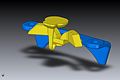 Industrial 3D printing setup.
 -
 3D selfie photo booth.
 -
 Video of a hyperboloid being printed.
 -
 3DBenchy printed using color mixing on an FDM printer.
 -
 Diagram of Fused Filament Fabrication.
 -
 Diagram of Stereolithography.
 -
 3D printed model of a car.
 -
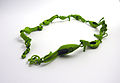 3D printed fashion accessory.
 -
 3D printed turbine.
 -
 3D printed ancient Egyptian figurine.
 -
 3D printed bridge.
 -
 3D printed miniature selfie.
 -
 Video of scientists investigating pollution from 3D printing.
 -
 Sign for a 3D printing service.

.jpg)


Ad. Transform your life with W8MD's
GLP-1 weight loss injections special from $29.99


W8MD Medical Weight Loss, Sleep and Medspa offers physician-supervised medical weight loss programs: NYC medical weight loss Philadelphia medical weight loss
Affordable GLP-1 Weight Loss ShotsAffordable GLP-1 Weight Loss Shots
Budget GLP-1 injections NYC (insurance & self-pay options) Popular treatments:
- Semaglutide starting from $29.99/week
- Tirzepatide starting from $45.00/week
✔ Most insurances accepted for visits ✔ Prior authorization support when eligible
Start your physician weight loss NYC journey today:
📍 NYC: Brooklyn weight loss center 📍 Philadelphia: Philadelphia weight loss center
📞 Call: 718-946-5500 (NYC) | 215-676-2334 (Philadelphia)
Tags: Affordable GLP1 weight loss NYC, Wegovy NYC, Zepbound NYC, Philadelphia medical weight loss


|
WikiMD Medical Encyclopedia |
Medical Disclaimer: WikiMD is not a substitute for professional medical advice. The information on WikiMD is provided as an information resource only, may be incorrect, outdated or misleading, and is not to be used or relied on for any diagnostic or treatment purposes. Please consult your health care provider before making any healthcare decisions or for guidance about a specific medical condition. WikiMD expressly disclaims responsibility, and shall have no liability, for any damages, loss, injury, or liability whatsoever suffered as a result of your reliance on the information contained in this site. By visiting this site you agree to the foregoing terms and conditions, which may from time to time be changed or supplemented by WikiMD. If you do not agree to the foregoing terms and conditions, you should not enter or use this site. See full disclaimer.
Credits:Most images are courtesy of Wikimedia commons, and templates, categories Wikipedia, licensed under CC BY SA or similar.
Translate this page: - East Asian
中文,
日本,
한국어,
South Asian
हिन्दी,
தமிழ்,
తెలుగు,
Urdu,
ಕನ್ನಡ,
Southeast Asian
Indonesian,
Vietnamese,
Thai,
မြန်မာဘာသာ,
বাংলা
European
español,
Deutsch,
français,
Greek,
português do Brasil,
polski,
română,
русский,
Nederlands,
norsk,
svenska,
suomi,
Italian
Middle Eastern & African
عربى,
Turkish,
Persian,
Hebrew,
Afrikaans,
isiZulu,
Kiswahili,
Other
Bulgarian,
Hungarian,
Czech,
Swedish,
മലയാളം,
मराठी,
ਪੰਜਾਬੀ,
ગુજરાતી,
Portuguese,
Ukrainian
