Arbekacin
Autoantibodies that bind to contents of the cell nucleus
Antinuclear antibodies (ANAs) are autoantibodies that bind to contents of the cell nucleus. They are present in a variety of autoimmune diseases and are often used as a diagnostic tool in rheumatology. ANAs can be detected through various laboratory techniques, most commonly by immunofluorescence on HEp-2 cells.
Types of Antinuclear Antibodies
Antinuclear antibodies can be classified based on their target antigens within the nucleus. Some of the common types include:
- Anti-dsDNA antibodies: These target double-stranded DNA and are highly specific for systemic lupus erythematosus (SLE).
- Anti-Smith antibodies: These target Smith antigen, a ribonucleoprotein, and are also associated with SLE.
- Anti-Ro/SSA and Anti-La/SSB antibodies: These are associated with Sjogren's syndrome and lupus.
- Anti-centromere antibodies: These are often found in limited scleroderma (CREST syndrome).
- Anti-nucleolar antibodies: These target nucleolar components and are associated with scleroderma.
Detection Methods
The presence of ANAs is typically detected using the indirect immunofluorescence (IIF) method on HEp-2 cells. This method allows for the observation of various staining patterns that can provide clues to the specific type of ANA present.
Immunofluorescence Patterns
The immunofluorescence patterns observed in ANA testing can be classified into several types:
- Homogeneous pattern: Indicates antibodies against chromatin, histones, and sometimes dsDNA.
- Speckled pattern: Suggests antibodies against extractable nuclear antigens (ENAs) such as Smith, RNP, SSA, and SSB.
- Nucleolar pattern: Associated with antibodies against nucleolar components, often seen in scleroderma.
- Centromere pattern: Characteristic of anti-centromere antibodies, often seen in limited scleroderma.
Clinical Significance
ANAs are a hallmark of autoimmune diseases, particularly systemic lupus erythematosus (SLE), where they are present in over 95% of patients. However, they can also be found in other conditions such as rheumatoid arthritis, scleroderma, Sjogren's syndrome, and mixed connective tissue disease.
Autoimmune Diseases Associated with ANAs
- Systemic Lupus Erythematosus (SLE): High prevalence of ANAs, especially anti-dsDNA and anti-Smith antibodies.
- Scleroderma: Presence of anti-centromere and anti-nucleolar antibodies.
- Sjogren's Syndrome: Often associated with anti-Ro/SSA and anti-La/SSB antibodies.
- Mixed Connective Tissue Disease (MCTD): Characterized by the presence of anti-U1 RNP antibodies.
Related Pages
Gallery
-
 Main antinuclear antibody patterns on immunofluorescence
 -
 dsDNA antibodies
 -
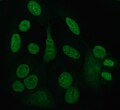 SSA and SSB antibodies
 -
 ANA - dsDNA antibody
 -
 Centromere pattern
 -
 ANA testing kit
 -
 ANA immunofluorescence
 -
 Nucleolar pattern
 -
 Crithidia luciliae assay
 -
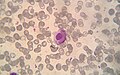 LE cell


Ad. Transform your life with W8MD's Budget GLP-1 injections from $29.99


W8MD offers medical weight loss programs including NYC medical weight loss and Philadelphia medical weight loss offering:
- Affordable GLP1 shots (generic and brand names) such as
- Wegovy NYC (Semaglutide)
- Zepbound NYC /
- Learn more: Budget GLP1 NYC & Philadelphia GLP1 shots
- Most insurances accepted
- Affordable GLP1 weight loss NYC such as Semaglutide starting from $29.99/week and $45.00/week (Tirzepatide) with insurance.
- Prescription weight loss NYC including:
NYC weight loss doctor appointmentsNYC weight loss doctor appointments
Start your physician weight loss journey today at our:
- NYC medical weight loss
- Philadelphia medical weight loss
- Call 718-946-5500 for NYC or 215-676-2334 for Philadelphia
Tags: Budget glp1 weight loss NYC, Zepbound NYC, Philadelphia medical weight loss, Wegovy NYC, Affordable glp1 shots Philadelphia


|
WikiMD's Wellness Encyclopedia |
| Let Food Be Thy Medicine Medicine Thy Food - Hippocrates |
Medical Disclaimer: WikiMD is not a substitute for professional medical advice. The information on WikiMD is provided as an information resource only, may be incorrect, outdated or misleading, and is not to be used or relied on for any diagnostic or treatment purposes. Please consult your health care provider before making any healthcare decisions or for guidance about a specific medical condition. WikiMD expressly disclaims responsibility, and shall have no liability, for any damages, loss, injury, or liability whatsoever suffered as a result of your reliance on the information contained in this site. By visiting this site you agree to the foregoing terms and conditions, which may from time to time be changed or supplemented by WikiMD. If you do not agree to the foregoing terms and conditions, you should not enter or use this site. See full disclaimer.
Credits:Most images are courtesy of Wikimedia commons, and templates, categories Wikipedia, licensed under CC BY SA or similar.
Translate this page: - East Asian
中文,
日本,
한국어,
South Asian
हिन्दी,
தமிழ்,
తెలుగు,
Urdu,
ಕನ್ನಡ,
Southeast Asian
Indonesian,
Vietnamese,
Thai,
မြန်မာဘာသာ,
বাংলা
European
español,
Deutsch,
français,
Greek,
português do Brasil,
polski,
română,
русский,
Nederlands,
norsk,
svenska,
suomi,
Italian
Middle Eastern & African
عربى,
Turkish,
Persian,
Hebrew,
Afrikaans,
isiZulu,
Kiswahili,
Other
Bulgarian,
Hungarian,
Czech,
Swedish,
മലയാളം,
मराठी,
ਪੰਜਾਬੀ,
ગુજરાતી,
Portuguese,
Ukrainian
