Underwater Demolition Team
Underwater Demolition Team
The Underwater Demolition Teams (UDTs) were a special-purpose force established by the United States Navy during World War II. Their primary mission was to conduct reconnaissance and demolition of obstacles on beaches prior to amphibious landings. The UDTs were the precursors to the modern United States Navy SEALs.
History
World War II
The concept of the Underwater Demolition Teams originated during World War II. The need for such a unit became apparent during the Allied invasion of Sicily in 1943, where obstacles and mines posed significant challenges to landing forces. The first UDTs were formed in 1943, and they played a crucial role in the Pacific Theater.
The UDTs were involved in several key operations, including the Battle of Saipan, the Battle of Guam, and the Battle of Iwo Jima. Their tasks included reconnaissance of landing beaches, removal of obstacles, and demolition of enemy fortifications.
Post-World War II
After World War II, the UDTs continued to evolve and were involved in various operations during the Korean War and the Vietnam War. They were instrumental in riverine operations and conducted reconnaissance and demolition missions in support of larger military objectives.
In 1962, the UDTs were reorganized and became part of the newly formed United States Navy SEALs. The SEALs inherited the UDTs' expertise in underwater demolition and expanded their capabilities to include a wide range of special operations.
Training and Operations
The training for UDT personnel was rigorous and included physical conditioning, swimming, diving, and demolition techniques. UDTs operated in small teams and were trained to work in hostile environments, often under the cover of darkness.
Legacy
The legacy of the Underwater Demolition Teams is carried on by the Navy SEALs, who continue to perform similar missions with advanced technology and expanded capabilities. The UDTs are remembered for their bravery and innovation in the face of challenging wartime conditions.
Related Pages
Gallery
-
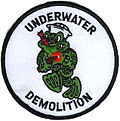 UDT shoulder sleeve patch
 -
 UDT operations during the Balikpapan Operation
 -
 Naval Combat Demolition Unit 1
 -
 Naval Combat Demolition Unit 45
 -
 NCDUs blasting a channel at Morotai
 -
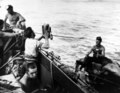 UDT operations during the Saipan Invasion
 -
 Lt. Luehrs, CO of UDT 3
 -
 Charp W. H. Acheson, CEC
 -
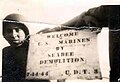 Seabee Demolition UDT 3
 -
 UDT-7 map of Yellow Beaches, Okinawa
 -
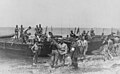 UDT 21 lands in Tokyo Bay
 -
 Sea King practicing Mercury space capsule recovery
 -
 Gemini 4 recovery operations
 -
 UDT-12 divers at the Apollo 8 capsule
 -
 UDT 11 Apollo 17 recovery insignia
 -
 UDT operations
 -
 UDT 11 commendation 1966
 -
 UDT operations
 -
 UDT 12 commendation 1967
 -
 UDT-12 personnel placing sensors
 -
 UDT Officer
 -
 UDT Badge


.jpg)


_(22527274968).jpg)


Ad. Transform your life with W8MD's Budget GLP-1 injections from $75


W8MD offers a medical weight loss program to lose weight in Philadelphia. Our physician-supervised medical weight loss provides:
- Weight loss injections in NYC (generic and brand names):
- Zepbound / Mounjaro, Wegovy / Ozempic, Saxenda
- Most insurances accepted or discounted self-pay rates. We will obtain insurance prior authorizations if needed.
- Generic GLP1 weight loss injections from $75 for the starting dose.
- Also offer prescription weight loss medications including Phentermine, Qsymia, Diethylpropion, Contrave etc.
NYC weight loss doctor appointmentsNYC weight loss doctor appointments
Start your NYC weight loss journey today at our NYC medical weight loss and Philadelphia medical weight loss clinics.
- Call 718-946-5500 to lose weight in NYC or for medical weight loss in Philadelphia 215-676-2334.
- Tags:NYC medical weight loss, Philadelphia lose weight Zepbound NYC, Budget GLP1 weight loss injections, Wegovy Philadelphia, Wegovy NYC, Philadelphia medical weight loss, Brookly weight loss and Wegovy NYC


|
WikiMD's Wellness Encyclopedia |
| Let Food Be Thy Medicine Medicine Thy Food - Hippocrates |
Medical Disclaimer: WikiMD is not a substitute for professional medical advice. The information on WikiMD is provided as an information resource only, may be incorrect, outdated or misleading, and is not to be used or relied on for any diagnostic or treatment purposes. Please consult your health care provider before making any healthcare decisions or for guidance about a specific medical condition. WikiMD expressly disclaims responsibility, and shall have no liability, for any damages, loss, injury, or liability whatsoever suffered as a result of your reliance on the information contained in this site. By visiting this site you agree to the foregoing terms and conditions, which may from time to time be changed or supplemented by WikiMD. If you do not agree to the foregoing terms and conditions, you should not enter or use this site. See full disclaimer.
Credits:Most images are courtesy of Wikimedia commons, and templates, categories Wikipedia, licensed under CC BY SA or similar.
Translate this page: - East Asian
中文,
日本,
한국어,
South Asian
हिन्दी,
தமிழ்,
తెలుగు,
Urdu,
ಕನ್ನಡ,
Southeast Asian
Indonesian,
Vietnamese,
Thai,
မြန်မာဘာသာ,
বাংলা
European
español,
Deutsch,
français,
Greek,
português do Brasil,
polski,
română,
русский,
Nederlands,
norsk,
svenska,
suomi,
Italian
Middle Eastern & African
عربى,
Turkish,
Persian,
Hebrew,
Afrikaans,
isiZulu,
Kiswahili,
Other
Bulgarian,
Hungarian,
Czech,
Swedish,
മലയാളം,
मराठी,
ਪੰਜਾਬੀ,
ગુજરાતી,
Portuguese,
Ukrainian
