Typography
The art and technique of arranging type to make written language legible, readable, and appealing
Typography is the art and technique of arranging type to make written language legible, readable, and appealing when displayed. The arrangement of type involves selecting typefaces, point sizes, line lengths, line-spacing (leading), and letter-spacing (tracking), and adjusting the space between pairs of letters (kerning). The term typography is also applied to the style, arrangement, and appearance of the letters, numbers, and symbols created by the process.
History
The history of typography dates back to the first punches and dies used to make seals and currency in ancient times. The first known movable type system was created in China by Bi Sheng around 1040 AD, using ceramic materials. The oldest known book printed with movable metal type is the Jikji, printed in Korea in 1377.
In Europe, the invention of the printing press by Johannes Gutenberg in the 15th century revolutionized the production of books and the dissemination of knowledge. Gutenberg's press used movable type made of metal, which allowed for the mass production of texts.
Development in Europe
The development of typography in Europe was marked by the creation of new typefaces and the refinement of printing techniques. The Renaissance period saw the emergence of typefaces such as Garamond and Baskerville, which are still in use today.
Modern Typography
In the 20th century, typography evolved with the advent of digital typesetting and desktop publishing. The development of software like Adobe Illustrator and LaTeX has allowed for more precise control over typographic elements.
Techniques
Typography involves several techniques to ensure that text is both legible and aesthetically pleasing. These include:
- Typefaces: The design of the characters, which can be serif or sans-serif.
- Point size: The size of the type, measured in points.
- Line length: The width of a block of text.
- Leading: The vertical space between lines of text.
- Kerning: The adjustment of space between individual letter pairs.
- Tracking: The uniform adjustment of space between all letters in a block of text.
Related pages
References
- Bringhurst, Robert. The Elements of Typographic Style. Hartley & Marks, 1992.
- Meggs, Philip B. A History of Graphic Design. John Wiley & Sons, 1998.
Gallery
-
 Specimen of the Trajan typeface
 -
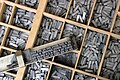 Metal movable type
 -
 Chinese movable type
 -
Type from the Jikji
-
 16th-century printing press
 -
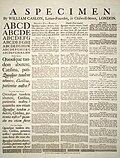 Specimen by William Caslon
 -
 Oscar Wilde's The English Renaissance of Art
 -
 Example of LaTeX typesetting
 -
 Wanted poster for John Wilkes Booth
 -
 Plaque at Rydal Mount


Ad. Transform your life with W8MD's Budget GLP-1 injections from $49.99


W8MD offers a medical weight loss program to lose weight in Philadelphia. Our physician-supervised medical weight loss provides:
- Weight loss injections in NYC (generic and brand names):
- Zepbound / Mounjaro, Wegovy / Ozempic, Saxenda
- Most insurances accepted or discounted self-pay rates. We will obtain insurance prior authorizations if needed.
- Generic GLP1 weight loss injections from $49.99 for the starting dose of Semaglutide and $65.00 for Tirzepatide.
- Also offer prescription weight loss medications including Phentermine, Qsymia, Diethylpropion, Contrave etc.
NYC weight loss doctor appointmentsNYC weight loss doctor appointments
Start your NYC weight loss journey today at our NYC medical weight loss and Philadelphia medical weight loss clinics.
- Call 718-946-5500 to lose weight in NYC or for medical weight loss in Philadelphia 215-676-2334.
- Tags:NYC medical weight loss, Philadelphia lose weight Zepbound NYC, Budget GLP1 weight loss injections, Wegovy Philadelphia, Wegovy NYC, Philadelphia medical weight loss, Brookly weight loss and Wegovy NYC


|
WikiMD's Wellness Encyclopedia |
| Let Food Be Thy Medicine Medicine Thy Food - Hippocrates |
Medical Disclaimer: WikiMD is not a substitute for professional medical advice. The information on WikiMD is provided as an information resource only, may be incorrect, outdated or misleading, and is not to be used or relied on for any diagnostic or treatment purposes. Please consult your health care provider before making any healthcare decisions or for guidance about a specific medical condition. WikiMD expressly disclaims responsibility, and shall have no liability, for any damages, loss, injury, or liability whatsoever suffered as a result of your reliance on the information contained in this site. By visiting this site you agree to the foregoing terms and conditions, which may from time to time be changed or supplemented by WikiMD. If you do not agree to the foregoing terms and conditions, you should not enter or use this site. See full disclaimer.
Credits:Most images are courtesy of Wikimedia commons, and templates, categories Wikipedia, licensed under CC BY SA or similar.
Translate this page: - East Asian
中文,
日本,
한국어,
South Asian
हिन्दी,
தமிழ்,
తెలుగు,
Urdu,
ಕನ್ನಡ,
Southeast Asian
Indonesian,
Vietnamese,
Thai,
မြန်မာဘာသာ,
বাংলা
European
español,
Deutsch,
français,
Greek,
português do Brasil,
polski,
română,
русский,
Nederlands,
norsk,
svenska,
suomi,
Italian
Middle Eastern & African
عربى,
Turkish,
Persian,
Hebrew,
Afrikaans,
isiZulu,
Kiswahili,
Other
Bulgarian,
Hungarian,
Czech,
Swedish,
മലയാളം,
मराठी,
ਪੰਜਾਬੀ,
ગુજરાતી,
Portuguese,
Ukrainian

