Venous return
The physiological process of blood returning to the heart
Venous return is the rate of blood flow back to the heart. It is a crucial component of the cardiovascular system, as it influences the cardiac output and overall circulatory function. Venous return is affected by several factors, including the venous pressure, the venous compliance, and the right atrial pressure.
Physiology
Venous return is primarily driven by the pressure gradient between the systemic circulation and the right atrium of the heart. The pressure in the systemic veins is higher than in the right atrium, allowing blood to flow back to the heart. This process is facilitated by the venous valves, which prevent backflow, and the muscle pump, which aids in propelling blood through the veins during physical activity.
Factors affecting venous return
Several factors can influence venous return:
- Venous pressure: The pressure within the veins is a major determinant of venous return. Increased venous pressure can enhance venous return, while decreased pressure can reduce it.
- Right atrial pressure: Also known as central venous pressure, this is the pressure in the right atrium. An increase in right atrial pressure can impede venous return.
- Venous compliance: The ability of veins to expand and accommodate varying volumes of blood. High compliance allows for greater blood storage, potentially reducing venous return.
- Blood volume: An increase in blood volume can enhance venous return by increasing venous pressure.
- Gravity: The position of the body can affect venous return, with standing potentially reducing it due to gravitational effects.
Clinical significance
Venous return is a critical factor in maintaining adequate cardiac output. Conditions that affect venous return can lead to heart failure or shock. For instance, a decrease in venous return can result in reduced cardiac output and hypotension. Conversely, excessive venous return can lead to congestive heart failure.
Related concepts
The relationship between venous return and cardiac output is often depicted using the vascular function curve and the cardiac function curve. These curves illustrate how changes in venous return affect cardiac output and vice versa.
Related pages
Gallery
-
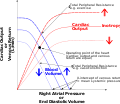 Starling curve showing the relationship between right atrial pressure and cardiac output.
 -
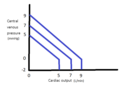 Vascular function curve illustrating the relationship between venous return and right atrial pressure.
 -
 Combined cardiac and vascular function curves.
 -
 Venous return curves demonstrating the effects of different physiological conditions.


References
- Guyton, A. C., & Hall, J. E. (2006). Textbook of Medical Physiology. Elsevier Saunders.
- Berne, R. M., & Levy, M. N. (2001). Cardiovascular Physiology. Mosby.
Ad. Transform your life with W8MD's Budget GLP-1 injections from $49.99


W8MD offers a medical weight loss program to lose weight in Philadelphia. Our physician-supervised medical weight loss provides:
- Weight loss injections in NYC (generic and brand names):
- Zepbound / Mounjaro, Wegovy / Ozempic, Saxenda
- Most insurances accepted or discounted self-pay rates. We will obtain insurance prior authorizations if needed.
- Generic GLP1 weight loss injections from $49.99 for the starting dose of Semaglutide and $65.00 for Tirzepatide.
- Also offer prescription weight loss medications including Phentermine, Qsymia, Diethylpropion, Contrave etc.
NYC weight loss doctor appointmentsNYC weight loss doctor appointments
Start your NYC weight loss journey today at our NYC medical weight loss and Philadelphia medical weight loss clinics.
- Call 718-946-5500 to lose weight in NYC or for medical weight loss in Philadelphia 215-676-2334.
- Tags:NYC medical weight loss, Philadelphia lose weight Zepbound NYC, Budget GLP1 weight loss injections, Wegovy Philadelphia, Wegovy NYC, Philadelphia medical weight loss, Brookly weight loss and Wegovy NYC


|
WikiMD's Wellness Encyclopedia |
| Let Food Be Thy Medicine Medicine Thy Food - Hippocrates |
Medical Disclaimer: WikiMD is not a substitute for professional medical advice. The information on WikiMD is provided as an information resource only, may be incorrect, outdated or misleading, and is not to be used or relied on for any diagnostic or treatment purposes. Please consult your health care provider before making any healthcare decisions or for guidance about a specific medical condition. WikiMD expressly disclaims responsibility, and shall have no liability, for any damages, loss, injury, or liability whatsoever suffered as a result of your reliance on the information contained in this site. By visiting this site you agree to the foregoing terms and conditions, which may from time to time be changed or supplemented by WikiMD. If you do not agree to the foregoing terms and conditions, you should not enter or use this site. See full disclaimer.
Credits:Most images are courtesy of Wikimedia commons, and templates, categories Wikipedia, licensed under CC BY SA or similar.
Translate this page: - East Asian
中文,
日本,
한국어,
South Asian
हिन्दी,
தமிழ்,
తెలుగు,
Urdu,
ಕನ್ನಡ,
Southeast Asian
Indonesian,
Vietnamese,
Thai,
မြန်မာဘာသာ,
বাংলা
European
español,
Deutsch,
français,
Greek,
português do Brasil,
polski,
română,
русский,
Nederlands,
norsk,
svenska,
suomi,
Italian
Middle Eastern & African
عربى,
Turkish,
Persian,
Hebrew,
Afrikaans,
isiZulu,
Kiswahili,
Other
Bulgarian,
Hungarian,
Czech,
Swedish,
മലയാളം,
मराठी,
ਪੰਜਾਬੀ,
ગુજરાતી,
Portuguese,
Ukrainian
