Spanish Armada


1588 naval campaign by Spain to invade England
Spanish Armada
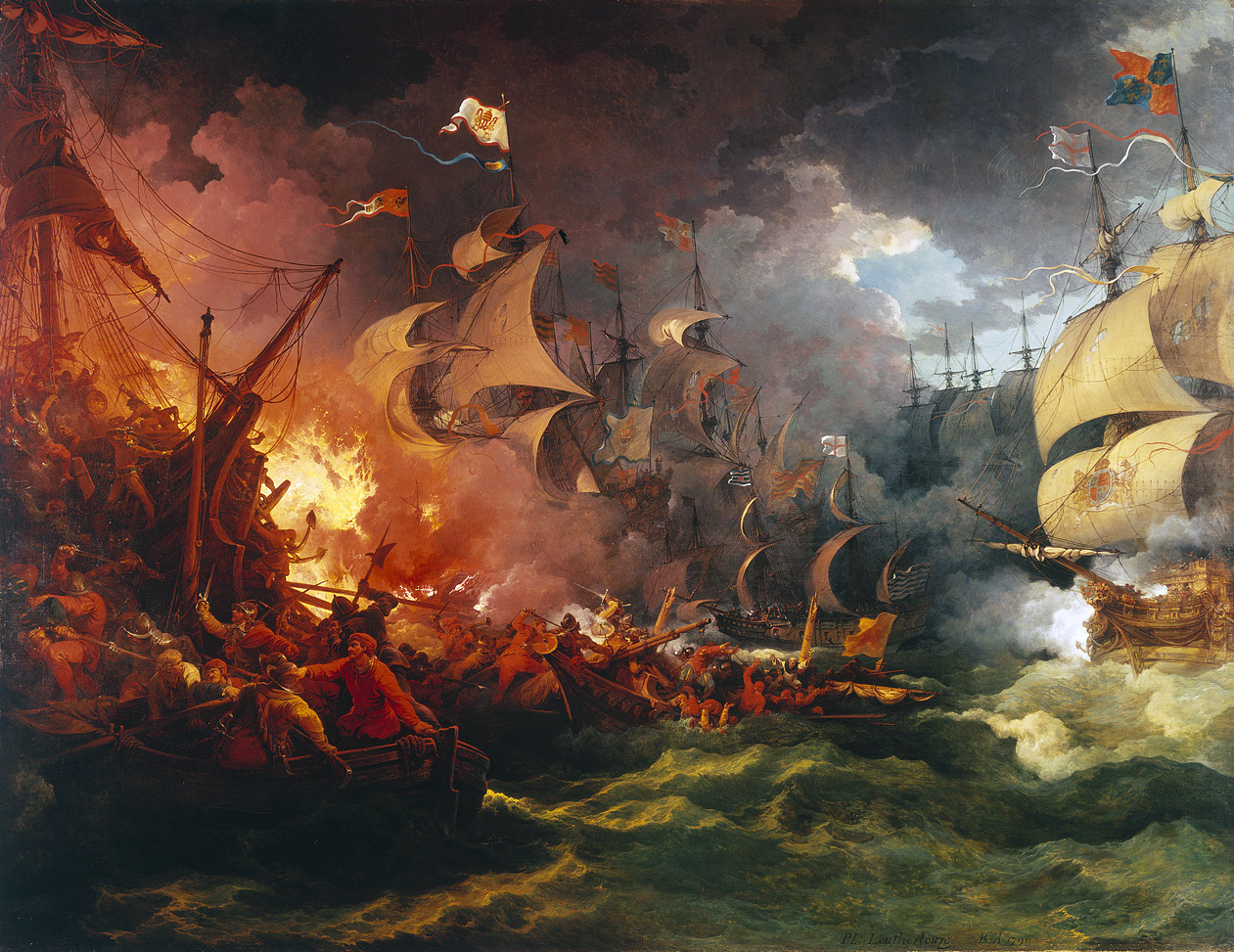

The Spanish Armada was a large fleet sent by Philip II of Spain in 1588 to invade England. The campaign was part of the Anglo-Spanish War (1585–1604), which was itself part of the larger conflict between Protestant and Catholic powers in Europe. The Armada's defeat marked a significant turning point in the rise of England as a global naval power.
Background[edit]
The conflict between Spain and England had been brewing for years, fueled by religious tensions and competition for overseas territories. Elizabeth I of England had supported the Dutch Revolt against Spanish rule and sanctioned privateers like Sir Francis Drake to raid Spanish ships and settlements. In response, Philip II planned to invade England, overthrow Elizabeth, and restore Catholicism.
The Fleet[edit]
The Spanish Armada consisted of about 130 ships, including galleons, galleys, and supply vessels. It was commanded by the Duke of Medina Sidonia, who had little naval experience. The fleet set sail from Lisbon in May 1588, intending to rendezvous with the Duke of Parma's army in the Spanish Netherlands and then invade England.
The Battle[edit]
The Armada reached the English Channel in late July 1588. The English fleet, commanded by Charles Howard and Sir Francis Drake, engaged the Spanish in a series of skirmishes. The English ships were more maneuverable and better armed, allowing them to inflict significant damage on the Spanish fleet.
The decisive battle took place off Gravelines on August 8, 1588. The English used fireships to break the Spanish formation, causing panic and confusion. The Spanish fleet was forced to retreat north around Scotland and Ireland, where many ships were wrecked by storms.
Aftermath[edit]
The defeat of the Spanish Armada was a major blow to Spain's maritime ambitions and marked the beginning of the decline of the Spanish Empire. For England, it was a moment of national pride and a turning point in its rise as a global naval power. The victory also bolstered the Protestant cause in Europe.
Legacy[edit]
The Spanish Armada has been the subject of numerous historical studies, artworks, and cultural references. It remains a symbol of the struggle between Protestant and Catholic powers in the 16th century and a key event in the history of naval warfare.
Related Pages[edit]
- Anglo-Spanish War (1585–1604)
- Elizabeth I of England
- Philip II of Spain
- Sir Francis Drake
- Duke of Medina Sidonia
- Dutch Revolt
- Battle of Gravelines
Template:Anglo-Spanish War (1585–1604)

Ad. Transform your health with W8MD Weight Loss, Sleep & MedSpa

Tired of being overweight?
Special offer:
Budget GLP-1 weight loss medications
- Semaglutide starting from $29.99/week and up with insurance for visit of $59.99 and up per week self pay.
- Tirzepatide starting from $45.00/week and up (dose dependent) or $69.99/week and up self pay
✔ Same-week appointments, evenings & weekends
Learn more:
- GLP-1 weight loss clinic NYC
- W8MD's NYC medical weight loss
- W8MD Philadelphia GLP-1 shots
- Philadelphia GLP-1 injections
- Affordable GLP-1 shots NYC
|
WikiMD Medical Encyclopedia |
Medical Disclaimer: WikiMD is for informational purposes only and is not a substitute for professional medical advice. Content may be inaccurate or outdated and should not be used for diagnosis or treatment. Always consult your healthcare provider for medical decisions. Verify information with trusted sources such as CDC.gov and NIH.gov. By using this site, you agree that WikiMD is not liable for any outcomes related to its content. See full disclaimer.
Credits:Most images are courtesy of Wikimedia commons, and templates, categories Wikipedia, licensed under CC BY SA or similar.
Translate this page: - East Asian
中文,
日本,
한국어,
South Asian
हिन्दी,
தமிழ்,
తెలుగు,
Urdu,
ಕನ್ನಡ,
Southeast Asian
Indonesian,
Vietnamese,
Thai,
မြန်မာဘာသာ,
বাংলা
European
español,
Deutsch,
français,
Greek,
português do Brasil,
polski,
română,
русский,
Nederlands,
norsk,
svenska,
suomi,
Italian
Middle Eastern & African
عربى,
Turkish,
Persian,
Hebrew,
Afrikaans,
isiZulu,
Kiswahili,
Other
Bulgarian,
Hungarian,
Czech,
Swedish,
മലയാളം,
मराठी,
ਪੰਜਾਬੀ,
ગુજરાતી,
Portuguese,
Ukrainian
