Flock worker's lung
Flock worker's lung is a rare occupational lung disease primarily affecting individuals who work in the flocking industry. This condition is a type of hypersensitivity pneumonitis (HP), also known as extrinsic allergic alveolitis, which is caused by the inhalation of flock, small, precision-cut fibers made from materials such as nylon, polyester, or cotton. These fibers, when inhaled, can cause an allergic reaction in the lungs, leading to inflammation and scarring (fibrosis) over time. Flock worker's lung was first identified in the 1990s, highlighting the potential health risks associated with flocking operations.
Causes and Risk Factors
The primary cause of flock worker's lung is the inhalation of flock fibers during the manufacturing process. These fibers can become airborne and, when inhaled, reach the alveoli, the tiny air sacs in the lungs where gas exchange occurs. The body's immune system may react to these foreign particles, leading to inflammation and, over time, fibrosis. Factors that increase the risk of developing this condition include poor ventilation in the workplace, inadequate use of personal protective equipment (PPE), and prolonged exposure to high concentrations of flock fibers.
Symptoms
Symptoms of flock worker's lung can vary from mild to severe and may include:
- Dry cough
- Shortness of breath
- Fatigue
- Weight loss
- Fever and chills
- Chest tightness
These symptoms can develop over time, making it difficult for affected individuals to immediately recognize the connection between their symptoms and exposure to flock fibers.
Diagnosis
Diagnosing flock worker's lung involves a combination of clinical evaluation, imaging tests, and occupational history. Key diagnostic tools include:
- High-resolution computed tomography (HRCT) scans of the chest, which can reveal characteristic patterns of lung inflammation and fibrosis.
- Pulmonary function tests (PFTs) to assess the lungs' capacity to move air in and out.
- Bronchoscopy with bronchoalveolar lavage (BAL), which involves inserting a small tube through the mouth or nose into the lungs to collect fluid from the air sacs. This fluid can then be analyzed for the presence of inflammatory cells.
- Taking a detailed occupational history to identify potential exposure to flock fibers.
Treatment
There is no cure for flock worker's lung, but treatment focuses on managing symptoms and preventing further lung damage. Treatment strategies may include:
- Avoiding further exposure to flock fibers, which is the most critical step in managing the condition.
- Use of corticosteroids to reduce lung inflammation.
- Supplemental oxygen therapy for individuals with severe respiratory symptoms.
- Pulmonary rehabilitation to improve lung function and quality of life.
Prevention
Preventing flock worker's lung involves controlling exposure to flock fibers in the workplace. Measures include:
- Improving ventilation systems to reduce airborne fiber concentrations.
- Using appropriate personal protective equipment (PPE), such as respirators.
- Regular monitoring of air quality and worker health to identify potential problems early.
See Also

-
 Flock worker's lung
 -
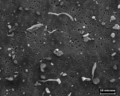 Flock worker's lung


Ad. Transform your life with W8MD's
GLP-1 weight loss injections special from $29.99 with insurance
|
WikiMD Medical Encyclopedia |
Medical Disclaimer: WikiMD is for informational purposes only and is not a substitute for professional medical advice. Content may be inaccurate or outdated and should not be used for diagnosis or treatment. Always consult your healthcare provider for medical decisions. Verify information with trusted sources such as CDC.gov and NIH.gov. By using this site, you agree that WikiMD is not liable for any outcomes related to its content. See full disclaimer.
Credits:Most images are courtesy of Wikimedia commons, and templates, categories Wikipedia, licensed under CC BY SA or similar.
Translate this page: - East Asian
中文,
日本,
한국어,
South Asian
हिन्दी,
தமிழ்,
తెలుగు,
Urdu,
ಕನ್ನಡ,
Southeast Asian
Indonesian,
Vietnamese,
Thai,
မြန်မာဘာသာ,
বাংলা
European
español,
Deutsch,
français,
Greek,
português do Brasil,
polski,
română,
русский,
Nederlands,
norsk,
svenska,
suomi,
Italian
Middle Eastern & African
عربى,
Turkish,
Persian,
Hebrew,
Afrikaans,
isiZulu,
Kiswahili,
Other
Bulgarian,
Hungarian,
Czech,
Swedish,
മലയാളം,
मराठी,
ਪੰਜਾਬੀ,
ગુજરાતી,
Portuguese,
Ukrainian
