Aralia elata
Process by which immune cells display antigens to T cells
| Immunology | ||||||||||
|---|---|---|---|---|---|---|---|---|---|---|
This immunology-related article is a stub.
|
Antigen presentation is a crucial process in the immune system that involves the display of antigens on the surface of antigen-presenting cells (APCs) to be recognized by T cells. This process is essential for the activation of T cells and the initiation of the adaptive immune response.
Mechanism
Antigen presentation involves the processing of antigens and their presentation on major histocompatibility complex (MHC) molecules. There are two main pathways of antigen presentation: the MHC class I pathway and the MHC class II pathway.
MHC Class I Pathway

The MHC class I pathway presents endogenous antigens, which are typically derived from proteins synthesized within the cell. These antigens are processed by the proteasome into peptide fragments. The peptides are then transported into the endoplasmic reticulum by the TAP complex, where they bind to MHC class I molecules. The peptide-MHC class I complexes are transported to the cell surface, where they can be recognized by CD8+ T cells.
MHC Class II Pathway

The MHC class II pathway presents exogenous antigens, which are typically derived from extracellular proteins. These antigens are taken up by APCs through endocytosis or phagocytosis and are processed in endosomes and lysosomes. The resulting peptides are loaded onto MHC class II molecules within the endosomal compartments. The peptide-MHC class II complexes are then transported to the cell surface, where they can be recognized by CD4+ T cells.
Antigen-Presenting Cells
The primary antigen-presenting cells are dendritic cells, macrophages, and B cells. Each of these cell types has specialized functions in antigen presentation and T cell activation.
- Dendritic cells are the most potent APCs and are essential for the initiation of T cell responses. They capture antigens in peripheral tissues and migrate to lymph nodes to present antigens to T cells.
- Macrophages are involved in the presentation of antigens to T cells in tissues and are important for the activation of helper T cells.
- B cells can present antigens to T cells, particularly in the context of humoral immunity.
Role in Immune Response
Antigen presentation is critical for the activation of T cells, which are central to the adaptive immune response. The recognition of peptide-MHC complexes by T cell receptors (TCRs) leads to T cell activation, proliferation, and differentiation into effector cells. This process is essential for the clearance of pathogens and the development of immunological memory.
Related pages
Gallery
-
 Diagram of antigen presentation
 -
 Diagram of MHC Class I antigen processing
 -
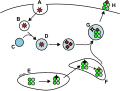 Diagram of MHC Class II antigen processing

-
 Aralia elata in bloom
 -
 Japanese taranome
 -
 Dureup
 -
 Dureup sukhoe
 -
 Dureup bugak and Chal jeonbyeong
 -
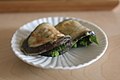 Dureup gaji jeon
 -
 Dureup jeon
 -
 Sungeo dureup doenjang mayo muchim
 -
 Aralia elata in Philadelphia


Ad. Transform your life with W8MD's Budget GLP-1 injections from $75


W8MD offers a medical weight loss program to lose weight in Philadelphia. Our physician-supervised medical weight loss provides:
- Weight loss injections in NYC (generic and brand names):
- Zepbound / Mounjaro, Wegovy / Ozempic, Saxenda
- Most insurances accepted or discounted self-pay rates. We will obtain insurance prior authorizations if needed.
- Generic GLP1 weight loss injections from $75 for the starting dose.
- Also offer prescription weight loss medications including Phentermine, Qsymia, Diethylpropion, Contrave etc.
NYC weight loss doctor appointmentsNYC weight loss doctor appointments
Start your NYC weight loss journey today at our NYC medical weight loss and Philadelphia medical weight loss clinics.
- Call 718-946-5500 to lose weight in NYC or for medical weight loss in Philadelphia 215-676-2334.
- Tags:NYC medical weight loss, Philadelphia lose weight Zepbound NYC, Budget GLP1 weight loss injections, Wegovy Philadelphia, Wegovy NYC, Philadelphia medical weight loss, Brookly weight loss and Wegovy NYC


|
WikiMD's Wellness Encyclopedia |
| Let Food Be Thy Medicine Medicine Thy Food - Hippocrates |
Medical Disclaimer: WikiMD is not a substitute for professional medical advice. The information on WikiMD is provided as an information resource only, may be incorrect, outdated or misleading, and is not to be used or relied on for any diagnostic or treatment purposes. Please consult your health care provider before making any healthcare decisions or for guidance about a specific medical condition. WikiMD expressly disclaims responsibility, and shall have no liability, for any damages, loss, injury, or liability whatsoever suffered as a result of your reliance on the information contained in this site. By visiting this site you agree to the foregoing terms and conditions, which may from time to time be changed or supplemented by WikiMD. If you do not agree to the foregoing terms and conditions, you should not enter or use this site. See full disclaimer.
Credits:Most images are courtesy of Wikimedia commons, and templates, categories Wikipedia, licensed under CC BY SA or similar.
Translate this page: - East Asian
中文,
日本,
한국어,
South Asian
हिन्दी,
தமிழ்,
తెలుగు,
Urdu,
ಕನ್ನಡ,
Southeast Asian
Indonesian,
Vietnamese,
Thai,
မြန်မာဘာသာ,
বাংলা
European
español,
Deutsch,
français,
Greek,
português do Brasil,
polski,
română,
русский,
Nederlands,
norsk,
svenska,
suomi,
Italian
Middle Eastern & African
عربى,
Turkish,
Persian,
Hebrew,
Afrikaans,
isiZulu,
Kiswahili,
Other
Bulgarian,
Hungarian,
Czech,
Swedish,
മലയാളം,
मराठी,
ਪੰਜਾਬੀ,
ગુજરાતી,
Portuguese,
Ukrainian
