Bus stop
Bus stop is a designated place where buses stop for passengers to board or alight from the bus. These are usually positioned on the highway and are distinct from off-highway facilities such as bus stations. The construction of bus stops tends to reflect the level of usage, with busy stops having shelters, seating, and possibly electronic passenger information systems; less busy stops may use a simple pole and flag to mark the location. Bus stops may be clustered together into transport hubs allowing interchange between routes from nearby stops and with other public transport modes.
History
The first recorded bus service was in Paris in 1662, and the earliest buses were horse drawn with the horses housed in the rear of the bus. The first bus stop in the history of public transport was in Bishops Stortford and was believed to be constructed in 1890, sheltering passengers from the elements.
Design
Bus stops can range from a simple pole and sign, to a rudimentary shelter, to a more complex structure. The usual minimum is a pole mounted flag with suitable direction markings. The design and construction of bus stops depend on the amount of passengers expected, duration of stay, and the amount of services available.
Types of Bus Stops
There are several types of bus stops, including:
- On-street bus stop: A bus stop sign is typically installed on a street where the bus driver can see it while driving.
- Off-street bus stop: These are usually found in bus stations, bus garages, and bus hubs. They may be marked by a shelter, a bus guide, or by any other means.
- Bus bay: A bus bay allows buses to pull off to the side of the road to let passengers board or get off without obstructing traffic.
- Bus bulb: Also known as a bus boarder or bus border, this type of bus stop allows buses to stay in their traffic lane while picking up and dropping off passengers.
Accessibility
In many jurisdictions, bus stops are legally required to be accessible to people with disabilities. Examples of features which may be required under such legislation include ramps or "kneeling buses", tactile paving, and audible signals.
See also

-
 Bus stop on Toppelundintie
 -
 Dublin Bus stop
 -
 Highpoint Shopping Centre Bus Setdown
 -
 Haltestellenschild Jungfernstieg retouched
 -
 YRT bin
 -
 Warden VIVA 6
 -
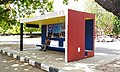 Bus stop in Chandigarh
 -
 98b line sign
 -
 Bulevardul Ion C. Bratianu a Piata Sfantul Gheorghe (Piata 1848) mellett
 -
 Pn bus stop Plesheevskaa 2000
 -
 Bus stop in Eilat with air conditioning Dereh HaArava street
 -
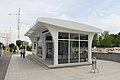 Ashgabat bus stop


_mellett._Fortepan_32011.jpg)


.jpg)
-
 Bus stop
 -
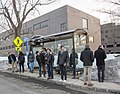 Bus stop
 -
 Bus stop
 -
 Bus stop
 -
Bus stop
-
Bus stop
-
Bus stop
-
Bus stop
-
Bus stop
-
Bus stop
-
Bus stop
-
Bus stop


Ad. Transform your life with W8MD's Budget GLP-1 injections from $75


W8MD offers a medical weight loss program to lose weight in Philadelphia. Our physician-supervised medical weight loss provides:
- Weight loss injections in NYC (generic and brand names):
- Zepbound / Mounjaro, Wegovy / Ozempic, Saxenda
- Most insurances accepted or discounted self-pay rates. We will obtain insurance prior authorizations if needed.
- Generic GLP1 weight loss injections from $75 for the starting dose.
- Also offer prescription weight loss medications including Phentermine, Qsymia, Diethylpropion, Contrave etc.
NYC weight loss doctor appointmentsNYC weight loss doctor appointments
Start your NYC weight loss journey today at our NYC medical weight loss and Philadelphia medical weight loss clinics.
- Call 718-946-5500 to lose weight in NYC or for medical weight loss in Philadelphia 215-676-2334.
- Tags:NYC medical weight loss, Philadelphia lose weight Zepbound NYC, Budget GLP1 weight loss injections, Wegovy Philadelphia, Wegovy NYC, Philadelphia medical weight loss, Brookly weight loss and Wegovy NYC


|
WikiMD's Wellness Encyclopedia |
| Let Food Be Thy Medicine Medicine Thy Food - Hippocrates |
Medical Disclaimer: WikiMD is not a substitute for professional medical advice. The information on WikiMD is provided as an information resource only, may be incorrect, outdated or misleading, and is not to be used or relied on for any diagnostic or treatment purposes. Please consult your health care provider before making any healthcare decisions or for guidance about a specific medical condition. WikiMD expressly disclaims responsibility, and shall have no liability, for any damages, loss, injury, or liability whatsoever suffered as a result of your reliance on the information contained in this site. By visiting this site you agree to the foregoing terms and conditions, which may from time to time be changed or supplemented by WikiMD. If you do not agree to the foregoing terms and conditions, you should not enter or use this site. See full disclaimer.
Credits:Most images are courtesy of Wikimedia commons, and templates, categories Wikipedia, licensed under CC BY SA or similar.
Translate this page: - East Asian
中文,
日本,
한국어,
South Asian
हिन्दी,
தமிழ்,
తెలుగు,
Urdu,
ಕನ್ನಡ,
Southeast Asian
Indonesian,
Vietnamese,
Thai,
မြန်မာဘာသာ,
বাংলা
European
español,
Deutsch,
français,
Greek,
português do Brasil,
polski,
română,
русский,
Nederlands,
norsk,
svenska,
suomi,
Italian
Middle Eastern & African
عربى,
Turkish,
Persian,
Hebrew,
Afrikaans,
isiZulu,
Kiswahili,
Other
Bulgarian,
Hungarian,
Czech,
Swedish,
മലയാളം,
मराठी,
ਪੰਜਾਬੀ,
ગુજરાતી,
Portuguese,
Ukrainian
