Flatkaka
Flatkaka is a traditional Icelandic bread that is flat in shape and typically made from rye. It is a staple food in Iceland and has been a part of the country's cuisine for centuries.
History
Flatkaka has a long history in Iceland, dating back to the settlement period when rye was one of the few grains that could be grown in the harsh Icelandic climate. The bread was traditionally baked on a hot stone or directly on the embers of a fire. Today, it is often baked on a stovetop or in an oven.
Preparation
The main ingredients in flatkaka are rye flour, water, and sometimes a small amount of wheat flour. The dough is mixed until it forms a firm ball, then rolled out until it is very thin. It is then cut into rounds and baked until it is lightly browned. Some recipes also include baking powder or baking soda to help the bread rise slightly.
Serving
Flatkaka is typically served with butter and Icelandic toppings such as smoked lamb (hangikjöt), fish, or cheese. It can be eaten as a snack, as part of a meal, or used to make sandwiches.
Cultural significance
Flatkaka holds a significant place in Icelandic culture. It is often served during special occasions and holidays, such as Þorrablót, an Icelandic midwinter festival. The bread is also a common sight at traditional Icelandic feasts and gatherings.
See also
This article is a Iceland-cuisine stub. You can help WikiMD by expanding it!


-
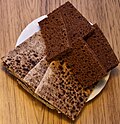 Rúgbrauð and Flatbrauð

Ad. Transform your life with W8MD's
GLP-1 weight loss injections special from $29.99 with insurance
|
WikiMD Medical Encyclopedia |
Medical Disclaimer: WikiMD is for informational purposes only and is not a substitute for professional medical advice. Content may be inaccurate or outdated and should not be used for diagnosis or treatment. Always consult your healthcare provider for medical decisions. Verify information with trusted sources such as CDC.gov and NIH.gov. By using this site, you agree that WikiMD is not liable for any outcomes related to its content. See full disclaimer.
Credits:Most images are courtesy of Wikimedia commons, and templates, categories Wikipedia, licensed under CC BY SA or similar.
Translate this page: - East Asian
中文,
日本,
한국어,
South Asian
हिन्दी,
தமிழ்,
తెలుగు,
Urdu,
ಕನ್ನಡ,
Southeast Asian
Indonesian,
Vietnamese,
Thai,
မြန်မာဘာသာ,
বাংলা
European
español,
Deutsch,
français,
Greek,
português do Brasil,
polski,
română,
русский,
Nederlands,
norsk,
svenska,
suomi,
Italian
Middle Eastern & African
عربى,
Turkish,
Persian,
Hebrew,
Afrikaans,
isiZulu,
Kiswahili,
Other
Bulgarian,
Hungarian,
Czech,
Swedish,
മലയാളം,
मराठी,
ਪੰਜਾਬੀ,
ગુજરાતી,
Portuguese,
Ukrainian
