Craniosynostosis
A condition in which one or more of the fibrous sutures in an infant skull prematurely fuses.
Craniosynostosis is a congenital condition characterized by the premature fusion of one or more of the cranial sutures, the fibrous joints between the bones of the skull. This early fusion restricts the growth of the skull and can lead to an abnormal head shape, increased intracranial pressure, and potential developmental delays.
Pathophysiology
The human skull is composed of several bones that are separated by sutures. These sutures allow the skull to expand as the brain grows during infancy and childhood. In craniosynostosis, one or more of these sutures close prematurely, which can affect the shape of the head and the growth of the brain.
Types of Craniosynostosis
Craniosynostosis can be classified based on the specific sutures that are affected:
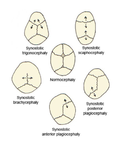
- Sagittal synostosis: The most common form, where the sagittal suture fuses, leading to a long, narrow head shape known as scaphocephaly.
- Coronal synostosis: Premature fusion of one or both coronal sutures, resulting in a short, wide head shape called brachycephaly if bilateral, or plagiocephaly if unilateral.
- Metopic synostosis: Fusion of the metopic suture, causing a triangular forehead and a condition known as trigonocephaly.
- Lambdoid synostosis: The rarest form, involving the lambdoid suture, leading to a flat head shape at the back.
Clinical Presentation
The clinical presentation of craniosynostosis varies depending on the sutures involved. Common signs include:
- Abnormal head shape
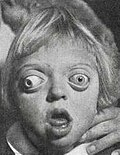
- Asymmetry of the face
- Developmental delays
- Increased intracranial pressure, which can cause irritability, vomiting, and visual disturbances
Diagnosis
Diagnosis of craniosynostosis is typically made through a combination of physical examination and imaging studies. Computed tomography (CT) scans are often used to confirm the diagnosis and to assess the extent of suture fusion.
Management
The primary treatment for craniosynostosis is surgical intervention. The goals of surgery are to correct the shape of the skull, relieve any increased intracranial pressure, and allow for normal brain growth. Surgical options include:
- Cranial vault remodeling: Reshaping the bones of the skull to allow for normal growth.
- Endoscopic strip craniectomy: A minimally invasive procedure that involves removing the fused suture to allow the skull to expand.
Prognosis
With early diagnosis and appropriate surgical treatment, most children with craniosynostosis can achieve normal brain development and head shape. However, ongoing monitoring is essential to manage any potential complications.
Related pages
-
 Craniosynostosis
 -
 Single suture synostosis
 -
 Plagiocephaly
 -
Anterior plagiocephaly
-
 Craniosynostosis
 -
 Carpenter Syndrome
 -
 Crouzon syndrome
 -
 Osseous Deformity
 -
 Marked proptosis
 -
 Pyrgocephalus
 -
 Suture fusion
 -
 Craniosynostosis


.jpg)


Ad. Transform your life with W8MD's Budget GLP-1 injections from $75


W8MD offers a medical weight loss program to lose weight in Philadelphia. Our physician-supervised medical weight loss provides:
- Weight loss injections in NYC (generic and brand names):
- Zepbound / Mounjaro, Wegovy / Ozempic, Saxenda
- Most insurances accepted or discounted self-pay rates. We will obtain insurance prior authorizations if needed.
- Generic GLP1 weight loss injections from $75 for the starting dose.
- Also offer prescription weight loss medications including Phentermine, Qsymia, Diethylpropion, Contrave etc.
NYC weight loss doctor appointmentsNYC weight loss doctor appointments
Start your NYC weight loss journey today at our NYC medical weight loss and Philadelphia medical weight loss clinics.
- Call 718-946-5500 to lose weight in NYC or for medical weight loss in Philadelphia 215-676-2334.
- Tags:NYC medical weight loss, Philadelphia lose weight Zepbound NYC, Budget GLP1 weight loss injections, Wegovy Philadelphia, Wegovy NYC, Philadelphia medical weight loss, Brookly weight loss and Wegovy NYC


|
WikiMD's Wellness Encyclopedia |
| Let Food Be Thy Medicine Medicine Thy Food - Hippocrates |
Medical Disclaimer: WikiMD is not a substitute for professional medical advice. The information on WikiMD is provided as an information resource only, may be incorrect, outdated or misleading, and is not to be used or relied on for any diagnostic or treatment purposes. Please consult your health care provider before making any healthcare decisions or for guidance about a specific medical condition. WikiMD expressly disclaims responsibility, and shall have no liability, for any damages, loss, injury, or liability whatsoever suffered as a result of your reliance on the information contained in this site. By visiting this site you agree to the foregoing terms and conditions, which may from time to time be changed or supplemented by WikiMD. If you do not agree to the foregoing terms and conditions, you should not enter or use this site. See full disclaimer.
Credits:Most images are courtesy of Wikimedia commons, and templates, categories Wikipedia, licensed under CC BY SA or similar.
Translate this page: - East Asian
中文,
日本,
한국어,
South Asian
हिन्दी,
தமிழ்,
తెలుగు,
Urdu,
ಕನ್ನಡ,
Southeast Asian
Indonesian,
Vietnamese,
Thai,
မြန်မာဘာသာ,
বাংলা
European
español,
Deutsch,
français,
Greek,
português do Brasil,
polski,
română,
русский,
Nederlands,
norsk,
svenska,
suomi,
Italian
Middle Eastern & African
عربى,
Turkish,
Persian,
Hebrew,
Afrikaans,
isiZulu,
Kiswahili,
Other
Bulgarian,
Hungarian,
Czech,
Swedish,
മലയാളം,
मराठी,
ਪੰਜਾਬੀ,
ગુજરાતી,
Portuguese,
Ukrainian

