Adaptive value
Concept in evolutionary biology
Adaptive value is a concept in evolutionary biology that refers to the extent to which a particular trait or behavior increases the fitness of an organism, thereby enhancing its chances of survival and reproduction in a given environment. This concept is central to the understanding of natural selection, as it helps explain why certain traits become more common in a population over time.
Overview
Adaptive value is determined by how well a trait or behavior contributes to an organism's ability to survive and reproduce. Traits with high adaptive value are more likely to be passed on to subsequent generations, as they confer advantages that improve the organism's reproductive success. Conversely, traits with low adaptive value may be selected against, leading to their reduction or elimination from the population.
Factors Influencing Adaptive Value
Several factors can influence the adaptive value of a trait, including:
- Environmental conditions: The adaptive value of a trait can vary depending on the specific environmental context. For example, a trait that is advantageous in one environment may be disadvantageous in another.
- Genetic variation: The presence of different alleles within a population can affect the adaptive value of a trait. Some alleles may confer higher fitness than others, leading to changes in allele frequencies over time.
- Interactions with other species: The adaptive value of a trait can also be influenced by interactions with other species, such as predation, competition, and symbiosis.
Examples of Adaptive Traits
Adaptive traits can be structural, physiological, or behavioral. Examples include:
- Camouflage: Many animals have evolved coloration that allows them to blend into their surroundings, reducing the likelihood of being detected by predators.
- Mimicry: Some species have evolved to mimic the appearance or behavior of other species, providing protection from predators or increasing their chances of attracting mates.
- Thermoregulation: Certain physiological adaptations, such as the ability to regulate body temperature, can enhance survival in extreme climates.
Adaptive Value and Evolution
The concept of adaptive value is integral to the process of evolution. Through natural selection, traits with higher adaptive value become more prevalent in a population, leading to evolutionary change. This process can result in the development of new species and the diversification of life forms.
Related Concepts
Adaptive value is closely related to several other concepts in evolutionary biology, including:
- Fitness (biology): A measure of an organism's reproductive success relative to others in the population.
- Natural selection: The process by which traits that confer higher fitness become more common in a population.
- Adaptation (biology): The process by which organisms become better suited to their environment through the development of advantageous traits.
Related pages
Gallery
-
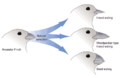 Diagram illustrating the process of evolution.
 -
 Graph showing changes in allele frequency over time.


Ad. Transform your life with W8MD's Budget GLP-1 injections from $75


W8MD offers a medical weight loss program to lose weight in Philadelphia. Our physician-supervised medical weight loss provides:
- Weight loss injections in NYC (generic and brand names):
- Zepbound / Mounjaro, Wegovy / Ozempic, Saxenda
- Most insurances accepted or discounted self-pay rates. We will obtain insurance prior authorizations if needed.
- Generic GLP1 weight loss injections from $75 for the starting dose.
- Also offer prescription weight loss medications including Phentermine, Qsymia, Diethylpropion, Contrave etc.
NYC weight loss doctor appointmentsNYC weight loss doctor appointments
Start your NYC weight loss journey today at our NYC medical weight loss and Philadelphia medical weight loss clinics.
- Call 718-946-5500 to lose weight in NYC or for medical weight loss in Philadelphia 215-676-2334.
- Tags:NYC medical weight loss, Philadelphia lose weight Zepbound NYC, Budget GLP1 weight loss injections, Wegovy Philadelphia, Wegovy NYC, Philadelphia medical weight loss, Brookly weight loss and Wegovy NYC


|
WikiMD's Wellness Encyclopedia |
| Let Food Be Thy Medicine Medicine Thy Food - Hippocrates |
Medical Disclaimer: WikiMD is not a substitute for professional medical advice. The information on WikiMD is provided as an information resource only, may be incorrect, outdated or misleading, and is not to be used or relied on for any diagnostic or treatment purposes. Please consult your health care provider before making any healthcare decisions or for guidance about a specific medical condition. WikiMD expressly disclaims responsibility, and shall have no liability, for any damages, loss, injury, or liability whatsoever suffered as a result of your reliance on the information contained in this site. By visiting this site you agree to the foregoing terms and conditions, which may from time to time be changed or supplemented by WikiMD. If you do not agree to the foregoing terms and conditions, you should not enter or use this site. See full disclaimer.
Credits:Most images are courtesy of Wikimedia commons, and templates, categories Wikipedia, licensed under CC BY SA or similar.
Translate this page: - East Asian
中文,
日本,
한국어,
South Asian
हिन्दी,
தமிழ்,
తెలుగు,
Urdu,
ಕನ್ನಡ,
Southeast Asian
Indonesian,
Vietnamese,
Thai,
မြန်မာဘာသာ,
বাংলা
European
español,
Deutsch,
français,
Greek,
português do Brasil,
polski,
română,
русский,
Nederlands,
norsk,
svenska,
suomi,
Italian
Middle Eastern & African
عربى,
Turkish,
Persian,
Hebrew,
Afrikaans,
isiZulu,
Kiswahili,
Other
Bulgarian,
Hungarian,
Czech,
Swedish,
മലയാളം,
मराठी,
ਪੰਜਾਬੀ,
ગુજરાતી,
Portuguese,
Ukrainian
