Cutaneous squamous-cell carcinoma

Editor-In-Chief: Prab R Tumpati, MD
Obesity, Sleep & Internal medicine
Founder, WikiMD Wellnesspedia &
W8MD's medical weight loss NYC, sleep center NYC
Philadelphia medical weight loss and Philadelphia sleep clinics
| Cutaneous squamous-cell carcinoma | |
|---|---|

| |
| Synonyms | cSCC |
| Pronounce | N/A |
| Specialty | N/A |
| Symptoms | Skin lesion, ulcer, scaly skin |
| Complications | Metastasis, local tissue destruction |
| Onset | Typically in older adults |
| Duration | Chronic |
| Types | N/A |
| Causes | Ultraviolet light exposure, immunosuppression |
| Risks | Sun exposure, fair skin, history of skin cancer |
| Diagnosis | Skin biopsy |
| Differential diagnosis | Basal-cell carcinoma, melanoma, actinic keratosis |
| Prevention | Sun protection, avoidance of tanning beds |
| Treatment | Surgical excision, Mohs surgery, radiation therapy |
| Medication | N/A |
| Prognosis | Generally good with treatment, but can be aggressive |
| Frequency | Common |
| Deaths | N/A |
Cutaneous squamous-cell carcinoma (cSCC) is a type of skin cancer that originates from the squamous cells in the epidermis, the skin's outermost layer. It is the second most common type of skin cancer, following basal cell carcinoma.
Causes
The primary cause of cSCC is prolonged exposure to ultraviolet (UV) radiation, either from the sun or from tanning beds. Other risk factors include having light-colored skin, a history of sunburns, a weakened immune system, and exposure to certain chemicals.
Symptoms
cSCC often appears as a firm red nodule or a flat lesion with a scaly, crusted surface. It is most commonly found on areas of the body that are frequently exposed to the sun, such as the face, ears, neck, lips, and backs of the hands.
Diagnosis
Diagnosis of cSCC typically involves a skin biopsy, in which a small sample of skin is removed and examined under a microscope. If cSCC is confirmed, additional tests may be performed to determine the stage of the cancer and whether it has spread to other parts of the body.
Treatment
Treatment options for cSCC depend on the size, location, and stage of the cancer, as well as the patient's overall health. Options may include surgery, radiation therapy, and topical medications. In some cases, a combination of treatments may be used.
Prevention
Prevention strategies for cSCC include protecting the skin from the sun, avoiding tanning beds, and regularly checking the skin for signs of cancer.
Gallery
-
 Advanced squamous cell carcinoma of the scalp
 -
 Squamous cell carcinoma of scalp, excision specimen
 -
 Cutaneous squamous-cell carcinoma
 -
 Histopathology of squamous cell carcinoma in situ
 -
 Micrograph of squamous cell carcinoma in situ - 100x
 -
 Micrograph of squamous cell carcinoma in situ - 400x
 -
 Bowen disease
 -
 Bowen disease
 -
 Bowen disease
 -
 Bowen disease
 -
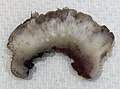 Gross pathology of squamous cell carcinoma


.jpg)
.jpg)
.jpg)
.jpg)

See also


Ad. Transform your health with W8MD Weight Loss, Sleep & MedSpa

Tired of being overweight?
Special offer:
Budget GLP-1 weight loss medications
- Semaglutide starting from $29.99/week and up with insurance for visit of $59.99 and up per week self pay.
- Tirzepatide starting from $45.00/week and up (dose dependent) or $69.99/week and up self pay
✔ Same-week appointments, evenings & weekends
Learn more:
- GLP-1 weight loss clinic NYC
- W8MD's NYC medical weight loss
- W8MD Philadelphia GLP-1 shots
- Philadelphia GLP-1 injections
- Affordable GLP-1 shots NYC
|
WikiMD Medical Encyclopedia |
Medical Disclaimer: WikiMD is for informational purposes only and is not a substitute for professional medical advice. Content may be inaccurate or outdated and should not be used for diagnosis or treatment. Always consult your healthcare provider for medical decisions. Verify information with trusted sources such as CDC.gov and NIH.gov. By using this site, you agree that WikiMD is not liable for any outcomes related to its content. See full disclaimer.
Credits:Most images are courtesy of Wikimedia commons, and templates, categories Wikipedia, licensed under CC BY SA or similar.
Translate this page: - East Asian
中文,
日本,
한국어,
South Asian
हिन्दी,
தமிழ்,
తెలుగు,
Urdu,
ಕನ್ನಡ,
Southeast Asian
Indonesian,
Vietnamese,
Thai,
မြန်မာဘာသာ,
বাংলা
European
español,
Deutsch,
français,
Greek,
português do Brasil,
polski,
română,
русский,
Nederlands,
norsk,
svenska,
suomi,
Italian
Middle Eastern & African
عربى,
Turkish,
Persian,
Hebrew,
Afrikaans,
isiZulu,
Kiswahili,
Other
Bulgarian,
Hungarian,
Czech,
Swedish,
മലയാളം,
मराठी,
ਪੰਜਾਬੀ,
ગુજરાતી,
Portuguese,
Ukrainian
