Cardoon
Cardoon

The cardoon (Cynara cardunculus) is a thistle-like perennial plant in the family Asteraceae. It is native to the Mediterranean region and is cultivated for its edible leaf stalks and roots. The cardoon is closely related to the artichoke, and both plants are known for their large, spiny leaves and purple flowers.
Description

The cardoon is a robust plant that can grow up to 1.5 meters in height. It has deeply lobed, silvery-grey leaves that are covered with fine hairs. The plant produces large, purple flower heads that resemble those of the artichoke. The flowers are surrounded by spiny bracts, which protect the developing seeds.
Cultivation

Cardoons are typically grown in well-drained soil with full sun exposure. They require a long growing season and are often blanched to improve the tenderness of the leaf stalks. Blanching involves covering the stalks with soil or opaque material to exclude light, which reduces bitterness and enhances flavor.
Uses

The cardoon is primarily grown for its edible parts, which include the leaf stalks and roots. The stalks are often used in Mediterranean cuisine, where they are boiled or braised and served as a vegetable. The roots can also be cooked and eaten, although they are less commonly used.
Medicinal Properties

Cardoons have been used in traditional medicine for their potential health benefits. They contain compounds that may aid in digestion and liver function. The plant is also a source of inulin, a type of dietary fiber that can promote gut health.
Environmental Impact

Cardoons can become invasive in some regions outside their native range. They are known to spread rapidly and can outcompete native vegetation. In some areas, they are considered a weed and are subject to control measures.
Related Pages
Gallery
-
 Cardoon bud
 -
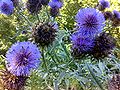 Cardoon plant


Ad. Transform your life with W8MD's
GLP-1 weight loss injections special from $29.99 with insurance
|
WikiMD Medical Encyclopedia |
Medical Disclaimer: WikiMD is for informational purposes only and is not a substitute for professional medical advice. Content may be inaccurate or outdated and should not be used for diagnosis or treatment. Always consult your healthcare provider for medical decisions. Verify information with trusted sources such as CDC.gov and NIH.gov. By using this site, you agree that WikiMD is not liable for any outcomes related to its content. See full disclaimer.
Credits:Most images are courtesy of Wikimedia commons, and templates, categories Wikipedia, licensed under CC BY SA or similar.
Translate this page: - East Asian
中文,
日本,
한국어,
South Asian
हिन्दी,
தமிழ்,
తెలుగు,
Urdu,
ಕನ್ನಡ,
Southeast Asian
Indonesian,
Vietnamese,
Thai,
မြန်မာဘာသာ,
বাংলা
European
español,
Deutsch,
français,
Greek,
português do Brasil,
polski,
română,
русский,
Nederlands,
norsk,
svenska,
suomi,
Italian
Middle Eastern & African
عربى,
Turkish,
Persian,
Hebrew,
Afrikaans,
isiZulu,
Kiswahili,
Other
Bulgarian,
Hungarian,
Czech,
Swedish,
മലയാളം,
मराठी,
ਪੰਜਾਬੀ,
ગુજરાતી,
Portuguese,
Ukrainian
