DVD
A digital optical disc storage format
Overview
The Digital Versatile Disc (DVD) is a digital optical disc storage format invented and developed in 1995. DVDs offer higher storage capacity than compact discs (CDs) while having the same dimensions. DVDs are widely used for video, data storage, and software distribution.
History
The development of the DVD format was a collaborative effort by several technology companies, including Sony, Philips, Toshiba, and Panasonic. The format was officially announced in 1995 and became available to the public in 1996. The introduction of DVDs marked a significant advancement in digital storage technology, providing a new medium for high-quality video and audio.
Technical Specifications
DVDs are available in several formats, including:
- DVD-Video: Used for storing digital video content. It supports various video and audio formats, including MPEG-2 video compression and Dolby Digital audio.
- DVD-Audio: Designed for high-fidelity audio storage, offering superior sound quality compared to CDs.
- DVD-ROM: Used for data storage, similar to a CD-ROM but with a much larger capacity.
- Recordable DVDs: These include DVD-R, DVD+R, DVD-RW, and DVD+RW, which allow users to record data onto the disc.
Storage Capacity
DVDs come in different capacities, typically ranging from 4.7 GB for a single-layer disc to 8.5 GB for a dual-layer disc. The increased capacity is achieved through the use of smaller pits and lands, as well as a tighter track pitch compared to CDs.
Applications
DVDs are used in a variety of applications, including:
- Home Entertainment: DVDs are a popular medium for distributing movies and television series, offering high-quality video and audio.
- Software Distribution: Many software applications are distributed on DVDs due to their large storage capacity.
- Data Backup and Storage: DVDs are used for backing up data and storing large files.
Advantages and Limitations
Advantages
- High Capacity: DVDs offer significantly more storage space than CDs, making them suitable for video and large data files.
- Durability: DVDs are more durable than VHS tapes and less prone to degradation over time.
- Compatibility: Most DVD players and drives are backward compatible with CDs.
Limitations
- Physical Damage: DVDs are susceptible to scratches and physical damage, which can affect playback.
- Obsolescence: With the advent of Blu-ray discs and digital streaming, DVDs are becoming less popular as a medium for video distribution.
Related Pages
DVD
-
 DVD logo
 -
 DVD-R bottom side
 -
 Comparison of disk storage
 -
 Schouhamer Immink
 -
 PS2 Fat Console Set
 -
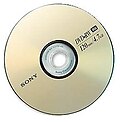 Sony DVD+RW
 -
 Sony CRX310S Internal PC DVD Drive Opened
 -
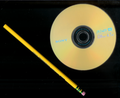 DVD pencil size comparison
 -
 DVD burning cutaway
 -
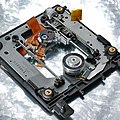 Dismantled DVD
 -
 QPxTool DVD error rate graph
 -
 DVDs on Library Shelves


Ad. Transform your life with W8MD's
GLP-1 weight loss injections special from $29.99


W8MD Medical Weight Loss, Sleep and Medspa offers physician-supervised medical weight loss programs: NYC medical weight loss Philadelphia medical weight loss
Affordable GLP-1 Weight Loss ShotsAffordable GLP-1 Weight Loss Shots
Budget GLP-1 injections NYC (insurance & self-pay options) Popular treatments:
- Semaglutide starting from $29.99/week
- Tirzepatide starting from $45.00/week
✔ Most insurances accepted for visits ✔ Prior authorization support when eligible
Start your physician weight loss NYC journey today:
📍 NYC: Brooklyn weight loss center 📍 Philadelphia: Philadelphia weight loss center
📞 Call: 718-946-5500 (NYC) | 215-676-2334 (Philadelphia)
Tags: Affordable GLP1 weight loss NYC, Wegovy NYC, Zepbound NYC, Philadelphia medical weight loss


|
WikiMD Medical Encyclopedia |
Medical Disclaimer: WikiMD is not a substitute for professional medical advice. The information on WikiMD is provided as an information resource only, may be incorrect, outdated or misleading, and is not to be used or relied on for any diagnostic or treatment purposes. Please consult your health care provider before making any healthcare decisions or for guidance about a specific medical condition. WikiMD expressly disclaims responsibility, and shall have no liability, for any damages, loss, injury, or liability whatsoever suffered as a result of your reliance on the information contained in this site. By visiting this site you agree to the foregoing terms and conditions, which may from time to time be changed or supplemented by WikiMD. If you do not agree to the foregoing terms and conditions, you should not enter or use this site. See full disclaimer.
Credits:Most images are courtesy of Wikimedia commons, and templates, categories Wikipedia, licensed under CC BY SA or similar.
Translate this page: - East Asian
中文,
日本,
한국어,
South Asian
हिन्दी,
தமிழ்,
తెలుగు,
Urdu,
ಕನ್ನಡ,
Southeast Asian
Indonesian,
Vietnamese,
Thai,
မြန်မာဘာသာ,
বাংলা
European
español,
Deutsch,
français,
Greek,
português do Brasil,
polski,
română,
русский,
Nederlands,
norsk,
svenska,
suomi,
Italian
Middle Eastern & African
عربى,
Turkish,
Persian,
Hebrew,
Afrikaans,
isiZulu,
Kiswahili,
Other
Bulgarian,
Hungarian,
Czech,
Swedish,
മലയാളം,
मराठी,
ਪੰਜਾਬੀ,
ગુજરાતી,
Portuguese,
Ukrainian
