Dysplastic nevus

Editor-In-Chief: Prab R Tumpati, MD
Obesity, Sleep & Internal medicine
Founder, WikiMD Wellnesspedia &
W8MD's medical weight loss NYC, sleep center NYC
Philadelphia medical weight loss and Philadelphia sleep clinics
| Dysplastic nevus | |
|---|---|
 | |
| Synonyms | Atypical mole, Clark's nevus |
| Pronounce | N/A |
| Specialty | N/A |
| Symptoms | Asymmetry, irregular borders, color variation, diameter > 5 mm |
| Complications | Increased risk of melanoma |
| Onset | Usually during adolescence |
| Duration | Chronic |
| Types | N/A |
| Causes | Genetic predisposition, UV radiation |
| Risks | Family history of melanoma, sun exposure |
| Diagnosis | Dermatoscopy, biopsy |
| Differential diagnosis | Melanoma, common nevus |
| Prevention | Sun protection, regular skin examination |
| Treatment | Excision if suspicious |
| Medication | N/A |
| Prognosis | N/A |
| Frequency | Common in Caucasian populations |
| Deaths | N/A |
Dysplastic nevus is a type of mole that is larger than normal (larger than a pencil eraser) and irregular in shape. It tends to have uneven color with dark brown centers and lighter, uneven edges. These moles tend to be hereditary (inherited from parents). People with dysplastic nevi may have more than 100 moles and have a greater chance of developing melanoma, a serious form of skin cancer.
Causes
The exact cause of dysplastic nevus is not known. However, it is believed to be influenced by a combination of genetic and environmental factors. Exposure to ultraviolet (UV) radiation from the sun and from tanning lamps and beds is a risk factor for all types of moles.
Symptoms
Dysplastic nevi often look different from common moles. A dysplastic nevus can have a mixture of several colors, from pink to dark brown. It is usually flat with a smooth, slightly scaly, or pebbly surface, and it has an irregular edge that may fade into the surrounding skin.
Diagnosis
A dermatologist can often identify a dysplastic nevus by its distinctive appearance. If there is any doubt, the dermatologist will perform a biopsy to make a definitive diagnosis.
Treatment
If a dysplastic nevus is suspected to be developing into a melanoma, it should be removed. However, if a dysplastic nevus does not change over time, there is no need for treatment.
Prevention
The best way to prevent dysplastic nevus and skin cancer is to protect the skin from the sun and other sources of UV radiation.
Gallery
-
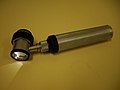 Dermatoscope used for examining skin lesions
 -
 Dermatoscope
 -
 Dysplastic nevus
 -
 Pie chart of incidence and malignancy of pigmented skin lesions
 -
 Dysplastic nevus under low magnification
 -
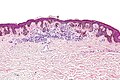 Dysplastic nevus under intermediate magnification
 -
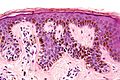 Dysplastic nevus under very high magnification


See also
References
<references />


Ad. Transform your life with W8MD's
GLP-1 weight loss injections special from $29.99 with insurance
|
WikiMD Medical Encyclopedia |
Medical Disclaimer: WikiMD is for informational purposes only and is not a substitute for professional medical advice. Content may be inaccurate or outdated and should not be used for diagnosis or treatment. Always consult your healthcare provider for medical decisions. Verify information with trusted sources such as CDC.gov and NIH.gov. By using this site, you agree that WikiMD is not liable for any outcomes related to its content. See full disclaimer.
Credits:Most images are courtesy of Wikimedia commons, and templates, categories Wikipedia, licensed under CC BY SA or similar.
Translate this page: - East Asian
中文,
日本,
한국어,
South Asian
हिन्दी,
தமிழ்,
తెలుగు,
Urdu,
ಕನ್ನಡ,
Southeast Asian
Indonesian,
Vietnamese,
Thai,
မြန်မာဘာသာ,
বাংলা
European
español,
Deutsch,
français,
Greek,
português do Brasil,
polski,
română,
русский,
Nederlands,
norsk,
svenska,
suomi,
Italian
Middle Eastern & African
عربى,
Turkish,
Persian,
Hebrew,
Afrikaans,
isiZulu,
Kiswahili,
Other
Bulgarian,
Hungarian,
Czech,
Swedish,
മലയാളം,
मराठी,
ਪੰਜਾਬੀ,
ગુજરાતી,
Portuguese,
Ukrainian
