Etiocholanolone
Etiocholanolone is a major endogenous androgen metabolite derived from testosterone and dihydrotestosterone (DHT). It is a member of the 17-ketosteroids class and is noteworthy for its role in the Hepato-Adrenal Syndrome and its presence in the urine as a marker for certain diseases and conditions. Unlike its precursors, etiocholanolone does not exhibit androgenic activity, meaning it does not affect the development and maintenance of masculine characteristics.
Biosynthesis and Metabolism
Etiocholanolone is produced in the body through the metabolism of testosterone and dihydrotestosterone, two potent androgens. The conversion process involves the reduction of these androgens by the enzyme 5α-reductase, followed by the action of 3α-hydroxysteroid dehydrogenase which transforms the reduced androgens into their respective 5α-androstanediol and then into etiocholanolone through the process of oxidation.
Physiological Role
Although etiocholanolone itself lacks androgenic activity, it plays a role in the immune system by modulating fever and causing leukocytosis, which is an increase in the number of white blood cells. This effect is part of the body's defense mechanism against infections and is known as the etiocholanolone-induced fever or pyrexia. Additionally, the presence of etiocholanolone in the body has been linked to the modulation of GABA receptors in the brain, suggesting a potential influence on mood and behavior.
Clinical Significance
The measurement of etiocholanolone levels in urine can be used in the diagnosis and monitoring of various conditions. Elevated levels of etiocholanolone have been associated with adrenocortical carcinoma, Cushing's syndrome, and certain forms of congenital adrenal hyperplasia. Conversely, low levels may indicate impaired adrenal function or adrenal insufficiency.
Hepato-Adrenal Syndrome
Etiocholanolone is implicated in the pathogenesis of Hepato-Adrenal Syndrome, a condition characterized by the combination of liver disease and adrenal gland dysfunction. In this syndrome, the metabolism of etiocholanolone is disrupted, leading to its accumulation and the subsequent development of symptoms such as fever and leukocytosis.
Detection and Measurement
The detection and quantification of etiocholanolone are typically performed using chromatography and mass spectrometry techniques. These methods allow for the precise measurement of etiocholanolone levels in biological samples, aiding in the diagnosis and management of diseases associated with its dysregulation.
Conclusion
Etiocholanolone is a significant metabolite in the human body, with implications for both physiological functions and the pathogenesis of various diseases. Its role in the immune response and potential effects on mood and behavior highlight the complex interplay between hormones and bodily functions. Ongoing research into etiocholanolone and its mechanisms of action may provide further insights into its clinical significance and therapeutic potential.

-
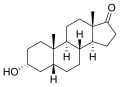 Etiocholanolone
 -
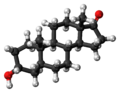 Etiocholanolone 3D Ball


Ad. Transform your health with W8MD Weight Loss, Sleep & MedSpa

Tired of being overweight?
Special offer:
Budget GLP-1 weight loss medications
- Semaglutide starting from $29.99/week and up with insurance for visit of $59.99 and up per week self pay.
- Tirzepatide starting from $45.00/week and up (dose dependent) or $69.99/week and up self pay
✔ Same-week appointments, evenings & weekends
Learn more:
- GLP-1 weight loss clinic NYC
- W8MD's NYC medical weight loss
- W8MD Philadelphia GLP-1 shots
- Philadelphia GLP-1 injections
- Affordable GLP-1 shots NYC
|
WikiMD Medical Encyclopedia |
Medical Disclaimer: WikiMD is for informational purposes only and is not a substitute for professional medical advice. Content may be inaccurate or outdated and should not be used for diagnosis or treatment. Always consult your healthcare provider for medical decisions. Verify information with trusted sources such as CDC.gov and NIH.gov. By using this site, you agree that WikiMD is not liable for any outcomes related to its content. See full disclaimer.
Credits:Most images are courtesy of Wikimedia commons, and templates, categories Wikipedia, licensed under CC BY SA or similar.
Translate this page: - East Asian
中文,
日本,
한국어,
South Asian
हिन्दी,
தமிழ்,
తెలుగు,
Urdu,
ಕನ್ನಡ,
Southeast Asian
Indonesian,
Vietnamese,
Thai,
မြန်မာဘာသာ,
বাংলা
European
español,
Deutsch,
français,
Greek,
português do Brasil,
polski,
română,
русский,
Nederlands,
norsk,
svenska,
suomi,
Italian
Middle Eastern & African
عربى,
Turkish,
Persian,
Hebrew,
Afrikaans,
isiZulu,
Kiswahili,
Other
Bulgarian,
Hungarian,
Czech,
Swedish,
മലയാളം,
मराठी,
ਪੰਜਾਬੀ,
ગુજરાતી,
Portuguese,
Ukrainian
