Chymase
Chymase is an enzyme that belongs to the serine protease family, specifically classified under the chymotrypsin-like proteases. It is predominantly found in the secretory granules of mast cells, which are cells involved in inflammatory and allergic responses. Chymase plays a significant role in the physiological and pathological processes of tissue remodeling, fibrosis, inflammation, and cardiovascular diseases. Its involvement in these processes makes it a potential therapeutic target for treating related conditions.
Function
Chymase is involved in various biological functions, primarily through the processing and activation of peptide precursors, and the degradation of extracellular matrix proteins. It contributes to the generation of angiotensin II, a potent vasoconstrictor, from angiotensin I, independent of the angiotensin-converting enzyme (ACE) pathway. This role is particularly important in the cardiovascular system, where angiotensin II regulates blood pressure and fluid balance. Additionally, chymase can degrade or activate several other bioactive peptides, including endothelin-1 and transforming growth factor-beta (TGF-β), implicating it in vascular remodeling and fibrosis.
Pathophysiology
The involvement of chymase in the pathophysiology of various diseases is a subject of ongoing research. In cardiovascular diseases, such as hypertension and heart failure, chymase's ability to generate angiotensin II contributes to the progression of these conditions. It is also implicated in the development of atherosclerosis through its effects on vascular remodeling and inflammation. In pulmonary diseases, chymase has been linked to airway remodeling and fibrosis, seen in conditions like asthma and chronic obstructive pulmonary disease (COPD). Furthermore, its role in tissue remodeling and fibrosis extends to liver and kidney diseases, where chymase inhibitors are being explored as potential therapeutic agents.
Clinical Significance
Given its involvement in various pathological processes, chymase is a target for therapeutic intervention. Chymase inhibitors are being developed and tested for their efficacy in treating cardiovascular diseases, fibrotic disorders, and other conditions where chymase plays a critical role. These inhibitors have the potential to offer therapeutic benefits in diseases where current treatments are limited or where chymase-mediated pathways contribute significantly to disease progression.
Research Directions
Research on chymase continues to uncover its roles in health and disease. Studies are exploring its involvement in immune responses, cancer, and other conditions beyond its established roles in cardiovascular and fibrotic diseases. The development of specific chymase inhibitors and their clinical application holds promise for novel therapeutic strategies against a range of diseases.
See Also

Chymase
-
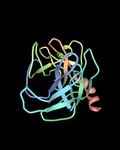 1KLT
1KLT

Ad. Transform your life with W8MD's
GLP-1 weight loss injections special from $29.99 with insurance
|
WikiMD Medical Encyclopedia |
Medical Disclaimer: WikiMD is for informational purposes only and is not a substitute for professional medical advice. Content may be inaccurate or outdated and should not be used for diagnosis or treatment. Always consult your healthcare provider for medical decisions. Verify information with trusted sources such as CDC.gov and NIH.gov. By using this site, you agree that WikiMD is not liable for any outcomes related to its content. See full disclaimer.
Credits:Most images are courtesy of Wikimedia commons, and templates, categories Wikipedia, licensed under CC BY SA or similar.
Translate this page: - East Asian
中文,
日本,
한국어,
South Asian
हिन्दी,
தமிழ்,
తెలుగు,
Urdu,
ಕನ್ನಡ,
Southeast Asian
Indonesian,
Vietnamese,
Thai,
မြန်မာဘာသာ,
বাংলা
European
español,
Deutsch,
français,
Greek,
português do Brasil,
polski,
română,
русский,
Nederlands,
norsk,
svenska,
suomi,
Italian
Middle Eastern & African
عربى,
Turkish,
Persian,
Hebrew,
Afrikaans,
isiZulu,
Kiswahili,
Other
Bulgarian,
Hungarian,
Czech,
Swedish,
മലയാളം,
मराठी,
ਪੰਜਾਬੀ,
ગુજરાતી,
Portuguese,
Ukrainian
