LNCaP
LNCaP is a human cell line commonly used in cancer research, particularly in the study of prostate cancer. This cell line was derived from a lymph node metastasis of a human prostatic adenocarcinoma.
Characteristics
LNCaP cells are known for their sensitivity to androgens, which are hormones that play a crucial role in the development and maintenance of male characteristics. This makes them an important model for studying androgen receptor signaling and the effects of androgen deprivation therapy in prostate cancer.
Applications
LNCaP cells are widely used in drug discovery and biomedical research to test the efficacy of new therapeutic agents targeting prostate cancer. They are also used to study the mechanisms of cancer progression and metastasis.
Culture Conditions
LNCaP cells are typically cultured in RPMI 1640 medium supplemented with 10% fetal bovine serum (FBS) and maintained at 37°C in a humidified atmosphere containing 5% carbon dioxide.
See Also
References
<references />
External Links
- [LNCaP cell line information at ATCC](https://www.atcc.org/products/all/CRL-1740.aspx)
LNCaP
-
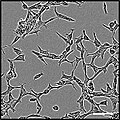 LNCaP
LNCaP -
 Comparison of cancer cell lines
 -
Thalmann figure


Ad. Transform your life with W8MD's
GLP-1 weight loss injections special from $29.99 with insurance
|
WikiMD Medical Encyclopedia |
Medical Disclaimer: WikiMD is for informational purposes only and is not a substitute for professional medical advice. Content may be inaccurate or outdated and should not be used for diagnosis or treatment. Always consult your healthcare provider for medical decisions. Verify information with trusted sources such as CDC.gov and NIH.gov. By using this site, you agree that WikiMD is not liable for any outcomes related to its content. See full disclaimer.
Credits:Most images are courtesy of Wikimedia commons, and templates, categories Wikipedia, licensed under CC BY SA or similar.
Translate this page: - East Asian
中文,
日本,
한국어,
South Asian
हिन्दी,
தமிழ்,
తెలుగు,
Urdu,
ಕನ್ನಡ,
Southeast Asian
Indonesian,
Vietnamese,
Thai,
မြန်မာဘာသာ,
বাংলা
European
español,
Deutsch,
français,
Greek,
português do Brasil,
polski,
română,
русский,
Nederlands,
norsk,
svenska,
suomi,
Italian
Middle Eastern & African
عربى,
Turkish,
Persian,
Hebrew,
Afrikaans,
isiZulu,
Kiswahili,
Other
Bulgarian,
Hungarian,
Czech,
Swedish,
മലയാളം,
मराठी,
ਪੰਜਾਬੀ,
ગુજરાતી,
Portuguese,
Ukrainian

