Pimobendan


Pimobendan is a veterinary medication used in the management of heart failure in dogs. It is classified as an inodilator, which means it has both inotropic and vasodilatory effects. Pimobendan is commonly prescribed for conditions such as congestive heart failure and dilated cardiomyopathy.
Mechanism of Action
Pimobendan works by inhibiting phosphodiesterase III, an enzyme that breaks down cyclic AMP (cAMP). By inhibiting this enzyme, pimobendan increases the levels of cAMP within cardiac muscle cells, leading to enhanced myocardial contractility. Additionally, pimobendan sensitizes the heart to calcium, further improving cardiac output. The vasodilatory effect is achieved through the relaxation of vascular smooth muscle, which reduces the workload on the heart.
Indications
Pimobendan is primarily indicated for the treatment of:
- Congestive heart failure due to mitral valve disease or dilated cardiomyopathy in dogs.
- Preclinical dilated cardiomyopathy in large breed dogs.
Dosage and Administration
The dosage of pimobendan is typically determined by the weight of the dog and the severity of the condition. It is usually administered orally, and the dosage may be adjusted based on the dog's response to the treatment.
Side Effects
Common side effects of pimobendan may include:
- Gastrointestinal upset, such as vomiting and diarrhea.
- Lethargy.
- Loss of appetite.
In rare cases, more severe side effects such as arrhythmias may occur.
Contraindications
Pimobendan should not be used in dogs with:
- Hypertrophic cardiomyopathy.
- Aortic stenosis.
- Known hypersensitivity to the drug.
Related Pages
References
External Links


-
 Pimobendan skeletal structure
 -
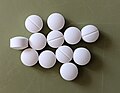 Pimobendan
 -
 Pimobendan synthesis

Ad. Transform your life with W8MD's
GLP-1 weight loss injections special from $29.99 with insurance
|
WikiMD Medical Encyclopedia |
Medical Disclaimer: WikiMD is for informational purposes only and is not a substitute for professional medical advice. Content may be inaccurate or outdated and should not be used for diagnosis or treatment. Always consult your healthcare provider for medical decisions. Verify information with trusted sources such as CDC.gov and NIH.gov. By using this site, you agree that WikiMD is not liable for any outcomes related to its content. See full disclaimer.
Credits:Most images are courtesy of Wikimedia commons, and templates, categories Wikipedia, licensed under CC BY SA or similar.
Translate this page: - East Asian
中文,
日本,
한국어,
South Asian
हिन्दी,
தமிழ்,
తెలుగు,
Urdu,
ಕನ್ನಡ,
Southeast Asian
Indonesian,
Vietnamese,
Thai,
မြန်မာဘာသာ,
বাংলা
European
español,
Deutsch,
français,
Greek,
português do Brasil,
polski,
română,
русский,
Nederlands,
norsk,
svenska,
suomi,
Italian
Middle Eastern & African
عربى,
Turkish,
Persian,
Hebrew,
Afrikaans,
isiZulu,
Kiswahili,
Other
Bulgarian,
Hungarian,
Czech,
Swedish,
മലയാളം,
मराठी,
ਪੰਜਾਬੀ,
ગુજરાતી,
Portuguese,
Ukrainian
