Hebei University
Hebei Medical University (HMU) is a prominent medical school located in Shijiazhuang, the capital city of Hebei Province, China. Established in the early 20th century, HMU has evolved into a key institution for medical education and research in the region. The university is recognized for its comprehensive programs in medicine, including undergraduate, postgraduate, and doctoral studies in various medical and health-related fields.
History
Hebei Medical University was founded in the year 1894, making it one of the oldest medical schools in China. Initially established as the Beiyang Medical School, it underwent several name changes and expansions over the decades. Throughout its history, HMU has been committed to providing quality medical education and contributing to the healthcare sector in China and beyond.
Campus
The university's campus combines historic architecture with modern facilities, creating an environment conducive to learning and research. Equipped with state-of-the-art laboratories, libraries, and teaching hospitals, HMU offers its students and faculty members the resources needed for advanced medical education and research.
Academic Programs
HMU offers a wide range of academic programs in the medical field, including but not limited to:
- MBBS (Bachelor of Medicine and Bachelor of Surgery)
- BSc in Nursing
- M.Med in various specializations
- MD/PhD in medical sciences
The university is particularly noted for its strong programs in clinical medicine, traditional Chinese medicine, and public health.
Research
Research at Hebei Medical University is highly regarded, with several key laboratories and research centers focusing on areas such as molecular medicine, neurosciences, and traditional Chinese medicine. The university encourages interdisciplinary research and collaboration with national and international institutions to address complex health challenges.
Affiliated Hospitals
HMU operates several affiliated hospitals, which serve as teaching hospitals for its students as well as providing medical services to the community. These hospitals are known for their quality of care and advanced medical technologies. They play a crucial role in the practical training of students, offering them hands-on experience in patient care, surgery, and other medical procedures.
International Collaboration
Hebei Medical University has established partnerships with universities and research institutions around the world. These collaborations facilitate academic exchanges, joint research projects, and opportunities for students and faculty to gain international exposure.
Admissions
Admission to Hebei Medical University is competitive, with applicants required to meet high academic standards. For international students, proficiency in Chinese is often necessary, although some programs may be offered in English to accommodate students from different linguistic backgrounds.
Notable Alumni
Over the years, HMU has produced a significant number of graduates who have gone on to achieve prominence in various fields of medicine and healthcare, contributing to the advancement of medical science and public health.
Conclusion
Hebei Medical University remains a beacon of medical education and research in China. With its rich history, comprehensive academic programs, and commitment to healthcare innovation, HMU continues to attract students and scholars from across the globe.

-
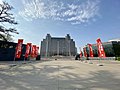 Hebei University Main Campus Front Gate
 -
 Hebei University New Campus Library
 -
 Hebei University Medical Campus
 -
 Hebei University Affiliated Hospital
 -
 Hebei University QiYi Road Campus A Building


Ad. Transform your life with W8MD's
GLP-1 weight loss injections special from $29.99 with insurance
|
WikiMD Medical Encyclopedia |
Medical Disclaimer: WikiMD is for informational purposes only and is not a substitute for professional medical advice. Content may be inaccurate or outdated and should not be used for diagnosis or treatment. Always consult your healthcare provider for medical decisions. Verify information with trusted sources such as CDC.gov and NIH.gov. By using this site, you agree that WikiMD is not liable for any outcomes related to its content. See full disclaimer.
Credits:Most images are courtesy of Wikimedia commons, and templates, categories Wikipedia, licensed under CC BY SA or similar.
Translate this page: - East Asian
中文,
日本,
한국어,
South Asian
हिन्दी,
தமிழ்,
తెలుగు,
Urdu,
ಕನ್ನಡ,
Southeast Asian
Indonesian,
Vietnamese,
Thai,
မြန်မာဘာသာ,
বাংলা
European
español,
Deutsch,
français,
Greek,
português do Brasil,
polski,
română,
русский,
Nederlands,
norsk,
svenska,
suomi,
Italian
Middle Eastern & African
عربى,
Turkish,
Persian,
Hebrew,
Afrikaans,
isiZulu,
Kiswahili,
Other
Bulgarian,
Hungarian,
Czech,
Swedish,
മലയാളം,
मराठी,
ਪੰਜਾਬੀ,
ગુજરાતી,
Portuguese,
Ukrainian
