Botrytis cinerea
Botrytis cinerea, commonly known as gray mold, is a necrotrophic fungus that affects many plant species, causing significant economic losses in agriculture and horticulture. This pathogen is ubiquitous, found in temperate and subtropical regions worldwide. It is particularly notorious for infecting a wide range of hosts, including fruits, vegetables, ornamentals, and field crops. The fungus thrives in cool, humid conditions, making densely planted crops especially vulnerable to outbreaks.
Characteristics
Botrytis cinerea is characterized by its ability to produce large amounts of conidia on gray, fuzzy mycelium, which is a key diagnostic feature. The conidia are dispersed by wind, water, and human activities, facilitating the rapid spread of the pathogen. The fungus can infect plants at various stages of growth, from seedlings to mature plants, and can affect almost all parts of the plant, including leaves, stems, flowers, and fruits.
Life Cycle
The life cycle of Botrytis cinerea includes both sexual and asexual phases. The asexual phase is more common and involves the production of conidia that germinate on the host plant, leading to infection. The sexual phase involves the formation of apothecia, which are small, mushroom-like structures that produce ascospores. These ascospores can also infect plants, but this phase is less common in many agricultural settings.
Disease Management
Management of Botrytis cinerea involves an integrated approach combining cultural, biological, and chemical strategies. Cultural practices include optimizing plant spacing, ensuring adequate ventilation, and removing infected plant material to reduce the inoculum load. Biological control options include the use of microbial antagonists that can outcompete or inhibit the growth of Botrytis cinerea. Chemical control involves the application of fungicides, although the pathogen has shown a remarkable ability to develop resistance to many commonly used products.
Economic Impact
The economic impact of Botrytis cinerea is significant, with losses due to reduced yield and quality of affected crops. In viticulture, for example, the fungus causes botrytis bunch rot or "noble rot," which can be desirable for certain sweet wines but generally results in significant losses. In horticulture, the aesthetic damage to ornamental plants can reduce their market value.
Research and Future Directions
Ongoing research aims to better understand the biology and ecology of Botrytis cinerea to develop more effective and sustainable management strategies. This includes the study of pathogen genetics to identify potential targets for resistance breeding in crops, as well as the development of novel biocontrol agents and fungicides.

-
 Botrytis conidiophore at 40X magnification
 -
 Botrytis cinerea culture on a plate
 -
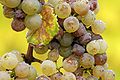 Botrytis cinerea on Riesling grapes
 -
 Botrytis rot on apple (Goudreinet)
 -
 Mycoviruses of Botrytis cinerea


.jpg)

Ad. Transform your life with W8MD's
GLP-1 weight loss injections special from $29.99 with insurance
|
WikiMD Medical Encyclopedia |
Medical Disclaimer: WikiMD is for informational purposes only and is not a substitute for professional medical advice. Content may be inaccurate or outdated and should not be used for diagnosis or treatment. Always consult your healthcare provider for medical decisions. Verify information with trusted sources such as CDC.gov and NIH.gov. By using this site, you agree that WikiMD is not liable for any outcomes related to its content. See full disclaimer.
Credits:Most images are courtesy of Wikimedia commons, and templates, categories Wikipedia, licensed under CC BY SA or similar.
Translate this page: - East Asian
中文,
日本,
한국어,
South Asian
हिन्दी,
தமிழ்,
తెలుగు,
Urdu,
ಕನ್ನಡ,
Southeast Asian
Indonesian,
Vietnamese,
Thai,
မြန်မာဘာသာ,
বাংলা
European
español,
Deutsch,
français,
Greek,
português do Brasil,
polski,
română,
русский,
Nederlands,
norsk,
svenska,
suomi,
Italian
Middle Eastern & African
عربى,
Turkish,
Persian,
Hebrew,
Afrikaans,
isiZulu,
Kiswahili,
Other
Bulgarian,
Hungarian,
Czech,
Swedish,
മലയാളം,
मराठी,
ਪੰਜਾਬੀ,
ગુજરાતી,
Portuguese,
Ukrainian
