Non-covalent interaction
Non-covalent interactions are a type of chemical bond that does not involve the sharing or transfer of electrons, but rather are based on more subtle physical forces. Unlike covalent bonds or ionic bonds, non-covalent interactions are usually reversible and are characterized by their lower bond energies. They play a crucial role in many biological processes, including the folding of proteins, the formation of DNA double helices, and the binding of substrates to enzymes. Non-covalent interactions include hydrogen bonds, van der Waals forces, ionic interactions in the context of biological molecules, and pi-pi interactions, among others.
Types of Non-covalent Interactions
Hydrogen Bonds
A hydrogen bond occurs when a hydrogen atom, which is covalently bonded to a highly electronegative atom such as oxygen or nitrogen, experiences an attraction to another electronegative atom. Hydrogen bonds are critical in stabilizing the structures of proteins and nucleic acids.
Van der Waals Forces
Van der Waals forces are weak, short-range forces that arise from transient asymmetries in the electron distributions of adjacent atoms or molecules. These forces are important for the physical properties of molecules, such as boiling and melting points.
Ionic Interactions
In biological molecules, ionic interactions occur between charged groups. These are weaker than the ionic bonds found in salts but are significant in the stability and conformation of polypeptides and nucleic acids.
Pi-Pi Interactions
Pi-pi interactions involve the stacking of aromatic rings found in amino acids like phenylalanine, tyrosine, and tryptophan. These interactions are important in protein folding and in the structure of DNA.
Role in Biological Systems
Non-covalent interactions are fundamental to the structure and function of biological macromolecules. For example, the specific folding of proteins into their three-dimensional shapes is largely driven by non-covalent interactions. Similarly, the double helix structure of DNA is stabilized by hydrogen bonds between the nucleotide bases and by pi-pi interactions between stacked bases.
Drug Design
Understanding non-covalent interactions is also crucial in the field of drug design. Many drugs work by binding to their target proteins through non-covalent interactions, inhibiting or modifying the protein's function. Designing drugs that can form strong non-covalent interactions with their targets can lead to more effective treatments with fewer side effects.
Conclusion
Non-covalent interactions are a key element in the structure and function of biological molecules, as well as in the design of therapeutic drugs. Despite their relatively weak nature, these interactions are crucial for the dynamic processes that underlie life at the molecular level.

-
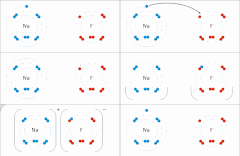 Non-covalent interaction
 -
 Hydrogen bonding in water
 -
 Halogen bonding
 -
 Dipole-dipole interaction in acetone
 -
 Π-π interaction
 -
 Cation-π interaction
 -
 Polar-π interaction
 -
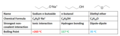 Boiling points of four-carbon compounds


Ad. Transform your life with W8MD's
GLP-1 weight loss injections special from $29.99


W8MD Medical Weight Loss, Sleep and Medspa offers physician-supervised medical weight loss programs: NYC medical weight loss Philadelphia medical weight loss
Affordable GLP-1 Weight Loss ShotsAffordable GLP-1 Weight Loss Shots
Budget GLP-1 injections NYC (insurance & self-pay options) Popular treatments:
- Semaglutide starting from $29.99/week
- Tirzepatide starting from $45.00/week
✔ Most insurances accepted for visits ✔ Prior authorization support when eligible
Start your physician weight loss NYC journey today:
📍 NYC: Brooklyn weight loss center 📍 Philadelphia: Philadelphia weight loss center
📞 Call: 718-946-5500 (NYC) | 215-676-2334 (Philadelphia)
Tags: Affordable GLP1 weight loss NYC, Wegovy NYC, Zepbound NYC, Philadelphia medical weight loss


|
WikiMD Medical Encyclopedia |
Medical Disclaimer: WikiMD is not a substitute for professional medical advice. The information on WikiMD is provided as an information resource only, may be incorrect, outdated or misleading, and is not to be used or relied on for any diagnostic or treatment purposes. Please consult your health care provider before making any healthcare decisions or for guidance about a specific medical condition. WikiMD expressly disclaims responsibility, and shall have no liability, for any damages, loss, injury, or liability whatsoever suffered as a result of your reliance on the information contained in this site. By visiting this site you agree to the foregoing terms and conditions, which may from time to time be changed or supplemented by WikiMD. If you do not agree to the foregoing terms and conditions, you should not enter or use this site. See full disclaimer.
Credits:Most images are courtesy of Wikimedia commons, and templates, categories Wikipedia, licensed under CC BY SA or similar.
Translate this page: - East Asian
中文,
日本,
한국어,
South Asian
हिन्दी,
தமிழ்,
తెలుగు,
Urdu,
ಕನ್ನಡ,
Southeast Asian
Indonesian,
Vietnamese,
Thai,
မြန်မာဘာသာ,
বাংলা
European
español,
Deutsch,
français,
Greek,
português do Brasil,
polski,
română,
русский,
Nederlands,
norsk,
svenska,
suomi,
Italian
Middle Eastern & African
عربى,
Turkish,
Persian,
Hebrew,
Afrikaans,
isiZulu,
Kiswahili,
Other
Bulgarian,
Hungarian,
Czech,
Swedish,
മലയാളം,
मराठी,
ਪੰਜਾਬੀ,
ગુજરાતી,
Portuguese,
Ukrainian
