Child safety seat
Child Safety Seat
A child safety seat, also known as a car seat or booster seat, is a seat designed specifically to protect children from injury or death during vehicle collisions. Most commonly, these seats are purchased and installed by car owners, but car manufacturers may integrate them directly into their vehicle's design. Given their critical role in child safety, the use of a child safety seat is mandated by law in many countries, subject to varying specifications and regulations.
Types of Child Safety Seats
Child safety seats vary according to the age, weight, and height of the child. The main types include:
- Rear-facing seats: Ideal for newborns and infants, these seats face the rear of the car and support the child's head, neck, and spine in the event of a sudden stop or collision.
- Forward-facing seats: For children who have outgrown the rear-facing seat, usually around age 2 or when they reach the maximum height or weight limit for the seat. These seats face the front of the car.
- Booster seats: Designed for children who have outgrown forward-facing seats, booster seats raise the child so that the car's seat belt fits properly over the stronger parts of the child's body.
- Convertible seats: These can be converted from rear-facing to forward-facing and, in some cases, even to a booster seat, making them adaptable as the child grows.
Installation and Usage
Proper installation and use of child safety seats are paramount. Incorrect installation can significantly reduce the effectiveness of a seat in a crash. It is recommended that caregivers follow the manufacturer's instructions carefully or seek professional assistance. In many areas, local fire departments, police stations, or hospitals offer free seat checks.
Legal Requirements
Laws regarding child safety seats vary by country and sometimes within regions of a country. Generally, these laws specify the age or weight up to which a child must be in a specific type of safety seat. Compliance with these laws is not only a legal requirement but also a critical measure for protecting children in vehicles.
Safety Standards
Child safety seats are subject to rigorous safety standards and testing to ensure they provide adequate protection. In the United States, for example, the National Highway Traffic Safety Administration (NHTSA) sets and enforces these standards. Consumers are advised to look for seats that meet or exceed these safety standards.
Choosing the Right Seat
When selecting a child safety seat, considerations include the child's age, height, and weight; the seat's type and safety features; and whether the seat is compatible with the vehicle. It is also advisable to check the seat's expiration date, as materials can degrade over time, and safety standards may change.
Conclusion
The use of child safety seats is a proven method for reducing the risk of injury and death for children in the event of a vehicle collision. By understanding the types of seats available, ensuring proper installation and use, and complying with legal requirements, caregivers can significantly enhance the safety of their child passengers.
| Child Safety | ||||||||
|---|---|---|---|---|---|---|---|---|
This Child safety related article is a stub.
|
| Automotive safety | ||||||||||
|---|---|---|---|---|---|---|---|---|---|---|
This automotive safety related article is a stub.
|

-
 Volvo child safety seat
 -
 Children in car seats
 -
 Blausen infant car seat
 -
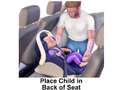 Car seat in middle back seat
 -
 Car seat not in front seat
 -
 Rear-facing infant car seat
 -
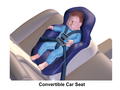 Convertible car seat (toddler)
 -
 Child booster seat


.png)

Ad. Transform your health with W8MD Weight Loss, Sleep & MedSpa

Tired of being overweight?
Special offer:
Budget GLP-1 weight loss medications
- Semaglutide starting from $29.99/week and up with insurance for visit of $59.99 and up per week self pay.
- Tirzepatide starting from $45.00/week and up (dose dependent) or $69.99/week and up self pay
✔ Same-week appointments, evenings & weekends
Learn more:
- GLP-1 weight loss clinic NYC
- W8MD's NYC medical weight loss
- W8MD Philadelphia GLP-1 shots
- Philadelphia GLP-1 injections
- Affordable GLP-1 shots NYC
|
WikiMD Medical Encyclopedia |
Medical Disclaimer: WikiMD is for informational purposes only and is not a substitute for professional medical advice. Content may be inaccurate or outdated and should not be used for diagnosis or treatment. Always consult your healthcare provider for medical decisions. Verify information with trusted sources such as CDC.gov and NIH.gov. By using this site, you agree that WikiMD is not liable for any outcomes related to its content. See full disclaimer.
Credits:Most images are courtesy of Wikimedia commons, and templates, categories Wikipedia, licensed under CC BY SA or similar.
Translate this page: - East Asian
中文,
日本,
한국어,
South Asian
हिन्दी,
தமிழ்,
తెలుగు,
Urdu,
ಕನ್ನಡ,
Southeast Asian
Indonesian,
Vietnamese,
Thai,
မြန်မာဘာသာ,
বাংলা
European
español,
Deutsch,
français,
Greek,
português do Brasil,
polski,
română,
русский,
Nederlands,
norsk,
svenska,
suomi,
Italian
Middle Eastern & African
عربى,
Turkish,
Persian,
Hebrew,
Afrikaans,
isiZulu,
Kiswahili,
Other
Bulgarian,
Hungarian,
Czech,
Swedish,
മലയാളം,
मराठी,
ਪੰਜਾਬੀ,
ગુજરાતી,
Portuguese,
Ukrainian
