Hydroxylation of estradiol
Hydroxylation of Estradiol
The Hydroxylation of Estradiol is a biochemical process that involves the addition of a hydroxyl group (-OH) to the estradiol molecule. This process is catalyzed by enzymes known as cytochrome P450 enzymes, specifically the CYP1A1, CYP1A2, and CYP1B1 isoforms. The hydroxylation of estradiol results in the formation of hydroxylated metabolites, which have different biological activities compared to the parent estradiol molecule.
Process
The hydroxylation of estradiol occurs primarily at two positions on the estradiol molecule: the 2-position and the 16-position. The 2-hydroxylation of estradiol produces 2-hydroxyestradiol, while the 16-hydroxylation of estradiol produces 16α-hydroxyestrone. These hydroxylated metabolites are then further metabolized by other enzymes, such as sulfotransferases and glucuronosyltransferases, to form conjugated metabolites that can be excreted from the body.
Biological Significance
The hydroxylation of estradiol has significant biological implications. The hydroxylated metabolites of estradiol have different biological activities compared to the parent estradiol molecule. For example, 2-hydroxyestradiol has weak estrogenic activity, while 16α-hydroxyestrone has potent estrogenic activity. The balance between these two metabolites can influence the overall estrogenic activity in the body, and has been implicated in the development of estrogen-dependent diseases such as breast cancer and endometriosis.
Clinical Significance
The hydroxylation of estradiol is also of clinical significance. The activity of the cytochrome P450 enzymes that catalyze this process can be influenced by various factors, including genetic polymorphisms, environmental exposures, and certain medications. Alterations in the activity of these enzymes can affect the balance of estradiol metabolites in the body, potentially influencing the risk of developing estrogen-dependent diseases. Furthermore, the measurement of estradiol metabolites in biological samples can be used as a biomarker for assessing individual differences in estrogen metabolism.
See Also
.svg)
This article is a biochemistry stub. You can help WikiMD by expanding it!

This article is a endocrinology stub. You can help WikiMD by expanding it!

-
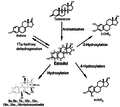 CYP-mediated biosynthesis and metabolism of estradiol
 -
 4OHE2 metabolism


Ad. Transform your health with W8MD Weight Loss, Sleep & MedSpa

Tired of being overweight?
Special offer:
Budget GLP-1 weight loss medications
- Semaglutide starting from $29.99/week and up with insurance for visit of $59.99 and up per week self pay.
- Tirzepatide starting from $45.00/week and up (dose dependent) or $69.99/week and up self pay
✔ Same-week appointments, evenings & weekends
Learn more:
- GLP-1 weight loss clinic NYC
- W8MD's NYC medical weight loss
- W8MD Philadelphia GLP-1 shots
- Philadelphia GLP-1 injections
- Affordable GLP-1 shots NYC
|
WikiMD Medical Encyclopedia |
Medical Disclaimer: WikiMD is for informational purposes only and is not a substitute for professional medical advice. Content may be inaccurate or outdated and should not be used for diagnosis or treatment. Always consult your healthcare provider for medical decisions. Verify information with trusted sources such as CDC.gov and NIH.gov. By using this site, you agree that WikiMD is not liable for any outcomes related to its content. See full disclaimer.
Credits:Most images are courtesy of Wikimedia commons, and templates, categories Wikipedia, licensed under CC BY SA or similar.
Translate this page: - East Asian
中文,
日本,
한국어,
South Asian
हिन्दी,
தமிழ்,
తెలుగు,
Urdu,
ಕನ್ನಡ,
Southeast Asian
Indonesian,
Vietnamese,
Thai,
မြန်မာဘာသာ,
বাংলা
European
español,
Deutsch,
français,
Greek,
português do Brasil,
polski,
română,
русский,
Nederlands,
norsk,
svenska,
suomi,
Italian
Middle Eastern & African
عربى,
Turkish,
Persian,
Hebrew,
Afrikaans,
isiZulu,
Kiswahili,
Other
Bulgarian,
Hungarian,
Czech,
Swedish,
മലയാളം,
मराठी,
ਪੰਜਾਬੀ,
ગુજરાતી,
Portuguese,
Ukrainian
