List of historical cuisines
Historical Cuisines refers to the culinary practices and traditions of various cultures throughout history. These cuisines have evolved over centuries and are influenced by a variety of factors including geographical location, climate, culture, and trade.
Ancient Cuisines
Ancient cuisines are the earliest known cuisines, dating back to the dawn of civilization. These include the cuisines of ancient civilizations such as the Egyptians, Greeks, and Romans.
Ancient Egyptian Cuisine
Ancient Egyptian cuisine was primarily based on bread and beer, supplemented with vegetables like onions and garlic, and fruits like dates and figs. Meat, such as beef and duck, was also consumed but was often reserved for special occasions.
Ancient Greek Cuisine
Ancient Greek cuisine was characterized by its simplicity. It was based on the "Mediterranean triad": wheat, olive oil, and wine. Other common ingredients included vegetables, fruits, fish, and a limited amount of meat.
Ancient Roman Cuisine
Ancient Roman cuisine was heavily influenced by the Greeks and was known for its variety and abundance. It included a wide range of ingredients, from common staples like wheat and olive oil to exotic foods imported from all corners of the Empire.
Medieval Cuisines
Medieval cuisines reflect the culinary habits of the Middle Ages. These include the cuisines of the Europeans, Middle Easterners, and Asians.
Medieval European Cuisine
Medieval European cuisine was diverse, with differences in cooking methods and ingredients between regions. Common elements included bread, cheese, and a variety of meats and fish. Spices, while expensive, were used in abundance by the wealthy.
Medieval Middle Eastern Cuisine
Medieval Middle Eastern cuisine was characterized by the use of spices, herbs, and a variety of meats, including lamb, goat, and chicken. Rice and wheat were staple foods, and fruits and nuts were also commonly consumed.
Medieval Asian Cuisine
Medieval Asian cuisine varied greatly by region. In China, rice was a staple, and a variety of meats, vegetables, and spices were used. In Japan, fish was a primary source of protein, and soy products like tofu were common.
Modern Cuisines
Modern cuisines are those that have developed more recently, in the last few centuries. These include the cuisines of various regions and countries, such as French cuisine, Italian cuisine, and American cuisine.


List of historical cuisines
-
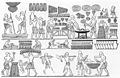 Ramses III bakery
 -
 Frybread
 -
 Dried Figs
 -
 Der Bohnenesser


.jpg)

Ad. Transform your health with W8MD Weight Loss, Sleep & MedSpa

Tired of being overweight?
Special offer:
Budget GLP-1 weight loss medications
- Semaglutide starting from $29.99/week and up with insurance for visit of $59.99 and up per week self pay.
- Tirzepatide starting from $45.00/week and up (dose dependent) or $69.99/week and up self pay
✔ Same-week appointments, evenings & weekends
Learn more:
- GLP-1 weight loss clinic NYC
- W8MD's NYC medical weight loss
- W8MD Philadelphia GLP-1 shots
- Philadelphia GLP-1 injections
- Affordable GLP-1 shots NYC
|
WikiMD Medical Encyclopedia |
Medical Disclaimer: WikiMD is for informational purposes only and is not a substitute for professional medical advice. Content may be inaccurate or outdated and should not be used for diagnosis or treatment. Always consult your healthcare provider for medical decisions. Verify information with trusted sources such as CDC.gov and NIH.gov. By using this site, you agree that WikiMD is not liable for any outcomes related to its content. See full disclaimer.
Credits:Most images are courtesy of Wikimedia commons, and templates, categories Wikipedia, licensed under CC BY SA or similar.
Translate this page: - East Asian
中文,
日本,
한국어,
South Asian
हिन्दी,
தமிழ்,
తెలుగు,
Urdu,
ಕನ್ನಡ,
Southeast Asian
Indonesian,
Vietnamese,
Thai,
မြန်မာဘာသာ,
বাংলা
European
español,
Deutsch,
français,
Greek,
português do Brasil,
polski,
română,
русский,
Nederlands,
norsk,
svenska,
suomi,
Italian
Middle Eastern & African
عربى,
Turkish,
Persian,
Hebrew,
Afrikaans,
isiZulu,
Kiswahili,
Other
Bulgarian,
Hungarian,
Czech,
Swedish,
മലയാളം,
मराठी,
ਪੰਜਾਬੀ,
ગુજરાતી,
Portuguese,
Ukrainian
