Jevons paradox
Jevons Paradox is an economic phenomenon that was first described by the English economist William Stanley Jevons. The paradox suggests that as technological progress increases the efficiency with which a resource is used, the rate of consumption of that resource may increase, rather than decrease. This is in contrast to the intuitive assumption that improving the efficiency of resource use should lead to a decrease in consumption of that resource.
History
The Jevons Paradox was first described by William Stanley Jevons in his 1865 book, The Coal Question. Jevons observed that as improvements in technology made coal more cost-effective to use, the demand for coal increased and more coal was consumed. This observation contradicted the common belief that improving the efficiency of coal use would decrease the demand for coal and thus the amount of coal consumed.
Explanation
The Jevons Paradox occurs because improvements in efficiency lower the relative cost of using a resource, which tends to increase the quantity of the resource demanded, potentially offsetting any savings from increased efficiency. This is known as the rebound effect. In some cases, the increase in demand may be so great that it more than offsets the efficiency gains, leading to an overall increase in resource use. This is known as backfire.
Examples
The Jevons Paradox has been observed in various contexts, including energy use, water use, and data consumption. For example, as the efficiency of computer data storage has increased, the total amount of data stored has also increased, rather than decreased. Similarly, improvements in water use efficiency have often led to increased total water use.
Implications
The Jevons Paradox has significant implications for energy policy and environmental sustainability. It suggests that policies aimed at improving resource efficiency may not be sufficient to reduce overall resource consumption and environmental impact. Instead, such policies may need to be complemented by measures that limit resource use directly.
See also
- Rebound effect (conservation)
- Khazzoom–Brookes postulate
- Energy conservation
- Sustainable development


This article is a environment-related stub. You can help WikiMD by expanding it!
-
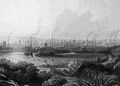 Jevons paradox
 -
 William Stanley Jevons
 -
 Elastic Demand Curve
 -
 Inelastic Demand Curve


Ad. Transform your life with W8MD's
GLP-1 weight loss injections special from $29.99


W8MD Medical Weight Loss, Sleep and Medspa offers physician-supervised medical weight loss programs: NYC medical weight loss Philadelphia medical weight loss
Affordable GLP-1 Weight Loss ShotsAffordable GLP-1 Weight Loss Shots
Budget GLP-1 injections NYC (insurance & self-pay options) Popular treatments:
- Semaglutide starting from $29.99/week
- Tirzepatide starting from $45.00/week
✔ Most insurances accepted for visits ✔ Prior authorization support when eligible
Start your physician weight loss NYC journey today:
📍 NYC: Brooklyn weight loss center 📍 Philadelphia: Philadelphia weight loss center
📞 Call: 718-946-5500 (NYC) | 215-676-2334 (Philadelphia)
Tags: Affordable GLP1 weight loss NYC, Wegovy NYC, Zepbound NYC, Philadelphia medical weight loss


|
WikiMD Medical Encyclopedia |
Medical Disclaimer: WikiMD is not a substitute for professional medical advice. The information on WikiMD is provided as an information resource only, may be incorrect, outdated or misleading, and is not to be used or relied on for any diagnostic or treatment purposes. Please consult your health care provider before making any healthcare decisions or for guidance about a specific medical condition. WikiMD expressly disclaims responsibility, and shall have no liability, for any damages, loss, injury, or liability whatsoever suffered as a result of your reliance on the information contained in this site. By visiting this site you agree to the foregoing terms and conditions, which may from time to time be changed or supplemented by WikiMD. If you do not agree to the foregoing terms and conditions, you should not enter or use this site. See full disclaimer.
Credits:Most images are courtesy of Wikimedia commons, and templates, categories Wikipedia, licensed under CC BY SA or similar.
Translate this page: - East Asian
中文,
日本,
한국어,
South Asian
हिन्दी,
தமிழ்,
తెలుగు,
Urdu,
ಕನ್ನಡ,
Southeast Asian
Indonesian,
Vietnamese,
Thai,
မြန်မာဘာသာ,
বাংলা
European
español,
Deutsch,
français,
Greek,
português do Brasil,
polski,
română,
русский,
Nederlands,
norsk,
svenska,
suomi,
Italian
Middle Eastern & African
عربى,
Turkish,
Persian,
Hebrew,
Afrikaans,
isiZulu,
Kiswahili,
Other
Bulgarian,
Hungarian,
Czech,
Swedish,
മലയാളം,
मराठी,
ਪੰਜਾਬੀ,
ગુજરાતી,
Portuguese,
Ukrainian
