Tater tots
Tater tots are a popular American side dish made from grated and deep-fried potato. They are recognized for their cylindrical shape and crispy exterior. Tater tots are often served with meals in both restaurants and homes, and are a common item in the frozen food section of grocery stores.
History
Tater tots were invented in 1953 by the Ore-Ida company, a brand of the H.J. Heinz Company. The founders, F. Nephi Grigg and Golden Grigg, were looking for a way to utilize the leftover slivers of cut-up potatoes. They chopped up the slivers, added flour and seasoning, then pushed the mixture through holes and sliced off pieces of the extruded mixture. Thus, the tater tot was born.
Preparation
Tater tots are typically made from grated potatoes, which are then deep-fried until they reach a golden brown color. Some variations may include additional ingredients such as onions, peppers, or cheese. They can be baked or fried, and are often served with ketchup or other dipping sauces.
Nutritional Information
Tater tots are high in carbohydrates due to their potato content. They also contain some protein, fiber, and a small amount of vitamins and minerals. However, because they are typically deep-fried, they can also be high in fat and calories.
Cultural Impact
Tater tots have become a staple in American cuisine, particularly in the Midwest. They are often served in school cafeterias, fast food restaurants, and are a popular choice for home-cooked meals. They have also been featured in various forms of media, most notably the 2004 film Napoleon Dynamite, which helped to boost their popularity.
See Also

-
 Close-up of tater tots
 -
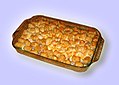 A dish of hotdish
.jpg)

Ad. Transform your life with W8MD's
GLP-1 weight loss injections special from $29.99 with insurance
|
WikiMD Medical Encyclopedia |
Medical Disclaimer: WikiMD is for informational purposes only and is not a substitute for professional medical advice. Content may be inaccurate or outdated and should not be used for diagnosis or treatment. Always consult your healthcare provider for medical decisions. Verify information with trusted sources such as CDC.gov and NIH.gov. By using this site, you agree that WikiMD is not liable for any outcomes related to its content. See full disclaimer.
Credits:Most images are courtesy of Wikimedia commons, and templates, categories Wikipedia, licensed under CC BY SA or similar.
Translate this page: - East Asian
中文,
日本,
한국어,
South Asian
हिन्दी,
தமிழ்,
తెలుగు,
Urdu,
ಕನ್ನಡ,
Southeast Asian
Indonesian,
Vietnamese,
Thai,
မြန်မာဘာသာ,
বাংলা
European
español,
Deutsch,
français,
Greek,
português do Brasil,
polski,
română,
русский,
Nederlands,
norsk,
svenska,
suomi,
Italian
Middle Eastern & African
عربى,
Turkish,
Persian,
Hebrew,
Afrikaans,
isiZulu,
Kiswahili,
Other
Bulgarian,
Hungarian,
Czech,
Swedish,
മലയാളം,
मराठी,
ਪੰਜਾਬੀ,
ગુજરાતી,
Portuguese,
Ukrainian
