Pelmeni
Pelmeni is a traditional Russian dish, often described as a type of dumpling. They are made from a thin, unleavened dough and typically filled with minced meat. The dish is popular across Russia and other countries of the former Soviet Union, and has also gained popularity in other parts of the world.
History
The origins of pelmeni are somewhat unclear, but it is generally agreed that they were first made by the indigenous peoples of Siberia. The word "pelmeni" is derived from the Komi-Permyak word "pel'nyan", which means "bread ear". This is likely a reference to the shape of the dumplings, which resemble small, rounded ears.
Preparation
Pelmeni are made by mixing flour, eggs, and water to create a thin, pliable dough. This dough is then rolled out and cut into small circles. A filling, typically made from minced meat such as beef, pork, or lamb, is placed in the center of each circle. The dough is then folded over the filling and sealed to create a small, round dumpling.
Once the pelmeni are formed, they are typically boiled in salted water until they float to the surface, indicating that they are fully cooked. They can also be frozen for later use.
Serving
Pelmeni are traditionally served with a variety of accompaniments, including sour cream, vinegar, mustard, or butter. They can also be served in a broth or soup.
Variations
There are many regional variations of pelmeni throughout Russia and the former Soviet Union. For example, in Siberia, pelmeni are often larger and filled with a mixture of meats, while in other regions they may be smaller and filled with a single type of meat.
See also
References
<references />
This article is a Russian cuisine-related stub. You can help WikiMD by expanding it!

Pelmeni
-
 Traditional Russian pelmeni
 -
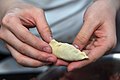 Modeling pelmeni in Buryatia, Russia
 -
 Pelmeni


Ad. Transform your life with W8MD's
GLP-1 weight loss injections special from $29.99 with insurance
|
WikiMD Medical Encyclopedia |
Medical Disclaimer: WikiMD is for informational purposes only and is not a substitute for professional medical advice. Content may be inaccurate or outdated and should not be used for diagnosis or treatment. Always consult your healthcare provider for medical decisions. Verify information with trusted sources such as CDC.gov and NIH.gov. By using this site, you agree that WikiMD is not liable for any outcomes related to its content. See full disclaimer.
Credits:Most images are courtesy of Wikimedia commons, and templates, categories Wikipedia, licensed under CC BY SA or similar.
Translate this page: - East Asian
中文,
日本,
한국어,
South Asian
हिन्दी,
தமிழ்,
తెలుగు,
Urdu,
ಕನ್ನಡ,
Southeast Asian
Indonesian,
Vietnamese,
Thai,
မြန်မာဘာသာ,
বাংলা
European
español,
Deutsch,
français,
Greek,
português do Brasil,
polski,
română,
русский,
Nederlands,
norsk,
svenska,
suomi,
Italian
Middle Eastern & African
عربى,
Turkish,
Persian,
Hebrew,
Afrikaans,
isiZulu,
Kiswahili,
Other
Bulgarian,
Hungarian,
Czech,
Swedish,
മലയാളം,
मराठी,
ਪੰਜਾਬੀ,
ગુજરાતી,
Portuguese,
Ukrainian
