Fig roll
Fig roll is a sweet roll filled with fig paste that is part of the cookie and pastry family. Originating from ancient Egypt, the fig roll has become a popular snack in many parts of the world, including the United Kingdom, the United States, and Australia.
History
The fig roll is believed to have originated in ancient Egypt, where figs were a common food staple. The first recorded mention of the fig roll dates back to the 19th century, when it was introduced in England by the Biscuit company Bakers. The fig roll was a popular snack during the Victorian era, and it remains a favorite in many parts of the world today.
Production
The production of a fig roll involves the use of fig paste, which is made from dried figs that have been rehydrated and ground into a paste. This paste is then spread onto a sheet of pastry dough, which is rolled up to encase the fig paste. The roll is then baked until golden brown.
Variations
There are several variations of the fig roll, including the Fig Newton, which is a popular version in the United States. The Fig Newton was named after the city of Newton, Massachusetts, and is produced by the Nabisco company. In the United Kingdom, the fig roll is often referred to as a "fig biscuit" and is produced by several companies, including McVitie's and Jacobs.
Nutritional Value
Fig rolls are a good source of fiber and contain a small amount of protein. They are also low in fat, making them a healthier alternative to many other types of cookies and pastries. However, like all sweet snacks, they should be consumed in moderation as part of a balanced diet.
See Also

-
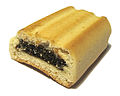 Fig roll
 -
 Fig newton 2
 -
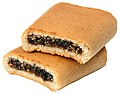 Fig Newtons stacked


Ad. Transform your life with W8MD's
GLP-1 weight loss injections special from $29.99 with insurance
|
WikiMD Medical Encyclopedia |
Medical Disclaimer: WikiMD is for informational purposes only and is not a substitute for professional medical advice. Content may be inaccurate or outdated and should not be used for diagnosis or treatment. Always consult your healthcare provider for medical decisions. Verify information with trusted sources such as CDC.gov and NIH.gov. By using this site, you agree that WikiMD is not liable for any outcomes related to its content. See full disclaimer.
Credits:Most images are courtesy of Wikimedia commons, and templates, categories Wikipedia, licensed under CC BY SA or similar.
Translate this page: - East Asian
中文,
日本,
한국어,
South Asian
हिन्दी,
தமிழ்,
తెలుగు,
Urdu,
ಕನ್ನಡ,
Southeast Asian
Indonesian,
Vietnamese,
Thai,
မြန်မာဘာသာ,
বাংলা
European
español,
Deutsch,
français,
Greek,
português do Brasil,
polski,
română,
русский,
Nederlands,
norsk,
svenska,
suomi,
Italian
Middle Eastern & African
عربى,
Turkish,
Persian,
Hebrew,
Afrikaans,
isiZulu,
Kiswahili,
Other
Bulgarian,
Hungarian,
Czech,
Swedish,
മലയാളം,
मराठी,
ਪੰਜਾਬੀ,
ગુજરાતી,
Portuguese,
Ukrainian
