Yugoslavia
Yugoslavia was a country in Southeast Europe during most of the 20th century. It came into existence after World War I in 1918 under the name of the Kingdom of Serbs, Croats and Slovenes by the merger of the provisional State of Slovenes, Croats and Serbs with the Kingdom of Serbia, and constituted the first union of the South Slavic people as a sovereign state, following centuries in which the region had been part of the Ottoman Empire and then Austria-Hungary.
History
Yugoslavia was formed in 1918 under the name Kingdom of Serbs, Croats and Slovenes. In 1929, it was officially renamed the Kingdom of Yugoslavia. The state was ruled by the Serbian dynasty of Karadjordjevic, which previously ruled the Kingdom of Serbia under Peter I from 1903 onward.
During World War II, Yugoslavia was invaded by the Axis powers in April 1941. The country was then divided, with parts annexed by Italy, Germany, Hungary, and Bulgaria. In 1943, a Democratic Federal Yugoslavia was proclaimed by the Partisan resistance. In 1944, the king recognized it as the legitimate government, but in November 1945 the monarchy was abolished.
Yugoslavia was renamed the Federal People's Republic of Yugoslavia in 1946, when a communist government was established. It acquired the territories of Istria, Rijeka, and Zadar from Italy. Partisan leader Josip Broz Tito ruled the country as president until his death in 1980.
Breakup
After Tito's death in 1980, ethnic tensions grew in Yugoslavia. The presidency rotated among the six republics. In 1991 and 1992, Slovenia, Croatia, Bosnia and Herzegovina, and Macedonia all seceded. Serbia and Montenegro declared the Federal Republic of Yugoslavia in 1992. Montenegro seceded in 2006 and Serbia became the legal successor of Yugoslavia.
Legacy
Yugoslavia was a significant early example of multi-ethnic federalism in Europe, a feature that it shared with the Soviet Union, Czechoslovakia and India. It was also the only socialist country in the Cold War era that was not part of the Warsaw Pact, instead founding the Non-Aligned Movement along with Egypt, India, and Indonesia.
 | |
|---|---|
 |
 |
Yugoslavia
-
 Coat of arms of the Kingdom of Yugoslavia
 -
 Emblem of Yugoslavia (1963–1992)
 -
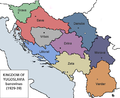 Banovine Jugoslavia
 -
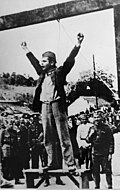 Stjepan Stevo Filipović
 -
 Flag of SR Bosnia and Herzegovina
 -
 Coat of Arms of the Socialist Republic of Bosnia and Herzegovina
 -
 Flag of SR Croatia
 -
 Coat of Arms of the Socialist Republic of Croatia
 -
 Flag of North Macedonia (1946–1992)
 -
 Coat of arms of Macedonia (1946-2009)

.svg)


.svg)

.svg)

;_Flag_of_North_Macedonia_(1991-1992).svg)
.svg)
Ad. Transform your health with W8MD Weight Loss, Sleep & MedSpa

Tired of being overweight?
Special offer:
Budget GLP-1 weight loss medications
- Semaglutide starting from $29.99/week and up with insurance for visit of $59.99 and up per week self pay.
- Tirzepatide starting from $45.00/week and up (dose dependent) or $69.99/week and up self pay
✔ Same-week appointments, evenings & weekends
Learn more:
- GLP-1 weight loss clinic NYC
- W8MD's NYC medical weight loss
- W8MD Philadelphia GLP-1 shots
- Philadelphia GLP-1 injections
- Affordable GLP-1 shots NYC
|
WikiMD Medical Encyclopedia |
Medical Disclaimer: WikiMD is for informational purposes only and is not a substitute for professional medical advice. Content may be inaccurate or outdated and should not be used for diagnosis or treatment. Always consult your healthcare provider for medical decisions. Verify information with trusted sources such as CDC.gov and NIH.gov. By using this site, you agree that WikiMD is not liable for any outcomes related to its content. See full disclaimer.
Credits:Most images are courtesy of Wikimedia commons, and templates, categories Wikipedia, licensed under CC BY SA or similar.
Translate this page: - East Asian
中文,
日本,
한국어,
South Asian
हिन्दी,
தமிழ்,
తెలుగు,
Urdu,
ಕನ್ನಡ,
Southeast Asian
Indonesian,
Vietnamese,
Thai,
မြန်မာဘာသာ,
বাংলা
European
español,
Deutsch,
français,
Greek,
português do Brasil,
polski,
română,
русский,
Nederlands,
norsk,
svenska,
suomi,
Italian
Middle Eastern & African
عربى,
Turkish,
Persian,
Hebrew,
Afrikaans,
isiZulu,
Kiswahili,
Other
Bulgarian,
Hungarian,
Czech,
Swedish,
മലയാളം,
मराठी,
ਪੰਜਾਬੀ,
ગુજરાતી,
Portuguese,
Ukrainian
