Prinzregententorte
Prinzregententorte
Prinzregententorte is a Bavarian torte, which consists of at least six, usually seven, thin layers of sponge cake interlaid with chocolate buttercream and a topping of apricot jam upon the very last. The exterior is covered in a dark chocolate glaze. The Prinzregententorte is named after Luitpold, prince regent of Bavaria. The cake's exact origin remains in dispute; among those claimed as its creators are the prince regent's cook, Johann Rottenhoeffer, the baker Anton Seidl, and the baking firm of Heinrich Georg Erbshäuser.
Ingredients
The main ingredients of a Prinzregententorte include:
Preparation
The preparation of Prinzregententorte involves baking thin layers of sponge cake and setting them with a chocolate buttercream. The top layer is coated with apricot jam followed by a dark chocolate glaze.
History
The Prinzregententorte is named after Luitpold, prince regent of Bavaria from 1886. The cake was supposedly created by one of his cooks, but this is not certain. Other sources name the baker Anton Seidl, or the baking firm of Heinrich Georg Erbshäuser.
Cultural Significance
The Prinzregententorte is a significant part of Bavarian cuisine and is a traditional dessert in this region. It is often served at special occasions and is a staple at many local bakeries and cafes.
Variations
There are several variations of the Prinzregententorte, some of which include different types of sponge cake or different flavors of buttercream. However, the traditional version remains the most popular.
See Also
References
- "Prinzregententorte." The Oxford Companion to Sugar and Sweets. Oxford University Press, 2015.
- "Prinzregententorte." The Great British Bake Off: How to Bake: The Perfect Victoria Sponge and Other Baking Secrets. Hodder & Stoughton, 2011.
External Links

-
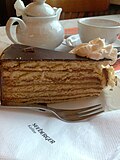 Prinzregententorte
 -
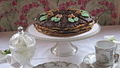 Prinzregententorte


Ad. Transform your life with W8MD's
GLP-1 weight loss injections special from $29.99 with insurance
|
WikiMD Medical Encyclopedia |
Medical Disclaimer: WikiMD is for informational purposes only and is not a substitute for professional medical advice. Content may be inaccurate or outdated and should not be used for diagnosis or treatment. Always consult your healthcare provider for medical decisions. Verify information with trusted sources such as CDC.gov and NIH.gov. By using this site, you agree that WikiMD is not liable for any outcomes related to its content. See full disclaimer.
Credits:Most images are courtesy of Wikimedia commons, and templates, categories Wikipedia, licensed under CC BY SA or similar.
Translate this page: - East Asian
中文,
日本,
한국어,
South Asian
हिन्दी,
தமிழ்,
తెలుగు,
Urdu,
ಕನ್ನಡ,
Southeast Asian
Indonesian,
Vietnamese,
Thai,
မြန်မာဘာသာ,
বাংলা
European
español,
Deutsch,
français,
Greek,
português do Brasil,
polski,
română,
русский,
Nederlands,
norsk,
svenska,
suomi,
Italian
Middle Eastern & African
عربى,
Turkish,
Persian,
Hebrew,
Afrikaans,
isiZulu,
Kiswahili,
Other
Bulgarian,
Hungarian,
Czech,
Swedish,
മലയാളം,
मराठी,
ਪੰਜਾਬੀ,
ગુજરાતી,
Portuguese,
Ukrainian
