Hard clam
Article about the hard clam
The hard clam (Mercenaria mercenaria), also known as the quahog, is a species of edible marine bivalve mollusk in the family Veneridae. It is native to the eastern shores of North America, from the Gulf of Saint Lawrence to the Gulf of Mexico. The hard clam is an important species both ecologically and economically, being a staple in the diet of many coastal communities and a significant part of the seafood industry.
Description
The hard clam has a thick, rounded shell that is typically grayish-white in color. The interior of the shell is smooth and often has a purple hue. The size of the clam can vary, with the smallest being referred to as "littlenecks" and the largest as "chowders". The shell is equipped with strong adductor muscles that allow the clam to close tightly, protecting it from predators and environmental stressors.
Habitat
Hard clams are found in sandy and muddy substrates in shallow waters, often in estuarine environments. They are filter feeders, drawing in water through their siphons and extracting plankton and other small particles for nourishment. This feeding process also helps to clarify the water, making them an important part of the ecosystem.
Reproduction
Hard clams are broadcast spawners, releasing eggs and sperm into the water column where fertilization occurs. The larvae are planktonic and undergo several stages of development before settling to the bottom and metamorphosing into juvenile clams. This reproductive strategy allows for wide dispersal of offspring, although it also means that survival rates can be low due to predation and environmental factors.
Economic Importance
The hard clam is a valuable resource for the fishing industry, particularly in the northeastern United States. They are harvested both commercially and recreationally, with methods including hand raking, dredging, and aquaculture. The clams are sold fresh, frozen, or canned, and are a popular ingredient in dishes such as clam chowder and clams casino.
Conservation
While hard clams are not currently considered endangered, their populations can be affected by overfishing, habitat loss, and pollution. Efforts to manage and conserve clam populations include setting harvest limits, protecting habitats, and developing sustainable aquaculture practices.
Gallery
-
 Hard clams, also known as littleneck clams
 -
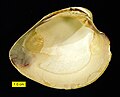 Close-up of Mercenaria mercenaria
 -
 Shell of a hard clam with encrustations
 -
 Hard clams in their natural habitat


Also see
Ad. Transform your life with W8MD's
GLP-1 weight loss injections special from $29.99 with insurance
|
WikiMD Medical Encyclopedia |
Medical Disclaimer: WikiMD is for informational purposes only and is not a substitute for professional medical advice. Content may be inaccurate or outdated and should not be used for diagnosis or treatment. Always consult your healthcare provider for medical decisions. Verify information with trusted sources such as CDC.gov and NIH.gov. By using this site, you agree that WikiMD is not liable for any outcomes related to its content. See full disclaimer.
Credits:Most images are courtesy of Wikimedia commons, and templates, categories Wikipedia, licensed under CC BY SA or similar.
Translate this page: - East Asian
中文,
日本,
한국어,
South Asian
हिन्दी,
தமிழ்,
తెలుగు,
Urdu,
ಕನ್ನಡ,
Southeast Asian
Indonesian,
Vietnamese,
Thai,
မြန်မာဘာသာ,
বাংলা
European
español,
Deutsch,
français,
Greek,
português do Brasil,
polski,
română,
русский,
Nederlands,
norsk,
svenska,
suomi,
Italian
Middle Eastern & African
عربى,
Turkish,
Persian,
Hebrew,
Afrikaans,
isiZulu,
Kiswahili,
Other
Bulgarian,
Hungarian,
Czech,
Swedish,
മലയാളം,
मराठी,
ਪੰਜਾਬੀ,
ગુજરાતી,
Portuguese,
Ukrainian
