Bus stop: Difference between revisions
CSV import |
CSV import |
||
| Line 1: | Line 1: | ||
''' | ==Bus Stop== | ||
A '''bus stop''' is a designated place where [[buses]] stop for passengers to board or alight from the bus. These stops are essential components of public [[transportation]] systems, providing access points for passengers to enter and exit the bus network. | |||
[[File:Bus_stop_on_Toppelundintie.jpg|Bus stop on Toppelundintie|thumb|right]] | |||
==Design== | ==Design and Features== | ||
Bus stops can | Bus stops can vary significantly in design, ranging from simple signposts to elaborate shelters. The design of a bus stop can affect the comfort and safety of passengers, as well as the efficiency of the bus service. | ||
===Basic Elements=== | |||
A typical bus stop may include the following elements: | |||
* '''Signage''': A sign indicating the presence of a bus stop, often displaying route numbers and schedules. | |||
* '''Shelter''': A structure providing protection from the weather, which may include seating. | |||
* '''Seating''': Benches or seats for waiting passengers. | |||
* '''Lighting''': Illumination for safety and visibility during nighttime. | |||
* '''Information Displays''': Timetables, route maps, and real-time arrival information. | |||
[[File:Dublin_Bus_stop.jpg|Dublin Bus stop|thumb|left]] | |||
===Accessibility=== | |||
Modern bus stops are designed to be accessible to all passengers, including those with disabilities. Features such as ramps, tactile paving, and audio announcements are commonly included to assist passengers with mobility or visual impairments. | |||
==Types of Bus Stops== | ==Types of Bus Stops== | ||
Bus stops can be categorized based on their location and function within the transportation network. | |||
===Curbside Stops=== | |||
These are the most common type of bus stops, located along the curb of a street. They are easily accessible for passengers and allow buses to quickly enter and exit traffic. | |||
===Bus Bays=== | |||
Bus bays are recessed areas off the main roadway, allowing buses to stop without blocking traffic. They provide a safer environment for passengers boarding or alighting. | |||
[[File:HighpointShoppingCentreBusSetdown.jpg|Highpoint Shopping Centre Bus Setdown|thumb|right]] | |||
===Bus Stations=== | |||
Larger facilities that serve multiple bus routes, often with additional amenities such as restrooms, ticket counters, and waiting areas. | |||
==Safety and Security== | |||
Safety is a critical consideration in the design and operation of bus stops. Well-lit and visible stops reduce the risk of accidents and crime. Security features may include surveillance cameras and emergency call buttons. | |||
[[File:Haltestellenschild_Jungfernstieg_retouched.jpg|Haltestellenschild Jungfernstieg retouched|thumb|left]] | |||
==Environmental Impact== | |||
Bus stops can contribute to environmental sustainability by encouraging the use of public transportation, which reduces the number of private vehicles on the road and lowers emissions. | |||
==Innovations in Bus Stops== | |||
Recent innovations in bus stop design include the integration of digital technology, such as electronic displays showing real-time bus arrival information and solar-powered lighting systems. | |||
[[File:YRT_bin.jpeg|YRT bin|thumb|right]] | |||
== | ==Cultural and Social Aspects== | ||
Bus stops often serve as social spaces where people from different backgrounds interact. They can also be sites for public art and community engagement. | |||
==Related Pages== | |||
* [[Public transport]] | * [[Public transport]] | ||
* [[Bus]] | |||
* [[Bus rapid transit]] | |||
* [[Bus station]] | * [[Bus station]] | ||
[[ | [[File:WardenVIVA6.JPG|Warden VIVA 6|thumb|left]] | ||
==Gallery== | |||
<gallery> | <gallery> | ||
File:Bus_stop_in_Chandigarh.jpg|Bus stop in Chandigarh | File:Bus_stop_in_Chandigarh.jpg|Bus stop in Chandigarh | ||
File:98b-line-sign.jpg|98b line sign | File:98b-line-sign.jpg|98b line sign | ||
</gallery> | </gallery> | ||
[[Category:Public transport]] | |||
[[Category:Bus transport]] | |||
Latest revision as of 10:57, 23 March 2025
Bus Stop[edit]
A bus stop is a designated place where buses stop for passengers to board or alight from the bus. These stops are essential components of public transportation systems, providing access points for passengers to enter and exit the bus network.

Design and Features[edit]
Bus stops can vary significantly in design, ranging from simple signposts to elaborate shelters. The design of a bus stop can affect the comfort and safety of passengers, as well as the efficiency of the bus service.
Basic Elements[edit]
A typical bus stop may include the following elements:
- Signage: A sign indicating the presence of a bus stop, often displaying route numbers and schedules.
- Shelter: A structure providing protection from the weather, which may include seating.
- Seating: Benches or seats for waiting passengers.
- Lighting: Illumination for safety and visibility during nighttime.
- Information Displays: Timetables, route maps, and real-time arrival information.

Accessibility[edit]
Modern bus stops are designed to be accessible to all passengers, including those with disabilities. Features such as ramps, tactile paving, and audio announcements are commonly included to assist passengers with mobility or visual impairments.
Types of Bus Stops[edit]
Bus stops can be categorized based on their location and function within the transportation network.
Curbside Stops[edit]
These are the most common type of bus stops, located along the curb of a street. They are easily accessible for passengers and allow buses to quickly enter and exit traffic.
Bus Bays[edit]
Bus bays are recessed areas off the main roadway, allowing buses to stop without blocking traffic. They provide a safer environment for passengers boarding or alighting.

Bus Stations[edit]
Larger facilities that serve multiple bus routes, often with additional amenities such as restrooms, ticket counters, and waiting areas.
Safety and Security[edit]
Safety is a critical consideration in the design and operation of bus stops. Well-lit and visible stops reduce the risk of accidents and crime. Security features may include surveillance cameras and emergency call buttons.

Environmental Impact[edit]
Bus stops can contribute to environmental sustainability by encouraging the use of public transportation, which reduces the number of private vehicles on the road and lowers emissions.
Innovations in Bus Stops[edit]
Recent innovations in bus stop design include the integration of digital technology, such as electronic displays showing real-time bus arrival information and solar-powered lighting systems.

Cultural and Social Aspects[edit]
Bus stops often serve as social spaces where people from different backgrounds interact. They can also be sites for public art and community engagement.
Related Pages[edit]

Gallery[edit]
-
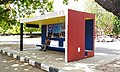 Bus stop in Chandigarh
 -
 98b line sign


