Fentanyl carbamate: Difference between revisions
CSV import |
No edit summary |
||
| Line 25: | Line 25: | ||
{{pharmacology-stub}} | {{pharmacology-stub}} | ||
<gallery> | <gallery> | ||
File:Fentanyl-carbamate structure.png|Fentanyl-carbamate structure | File:Fentanyl-carbamate structure.png|Fentanyl-carbamate structure | ||
</gallery> | </gallery> | ||
Latest revision as of 21:52, 16 March 2025
Fentanyl carbamate is a potent opioid analgesic drug that is a derivative of fentanyl. It is used in the treatment of severe pain, often in patients who have become tolerant to other opioids. It is approximately 100 times more potent than morphine and 50 times more potent than heroin.
Pharmacology[edit]
Fentanyl carbamate works by binding to the body's opioid receptors, which are found in areas of the brain that control pain and emotions. When fentanyl carbamate attaches to these receptors, it can drive up dopamine levels in the brain's reward areas, producing a state of euphoria and relaxation.
Medical Uses[edit]
Fentanyl carbamate is used for the management of severe chronic pain, such as that experienced by cancer patients. It is also used in the management of breakthrough pain, which is pain that 'breaks through' the effects of the long-acting opioids that a patient may be taking for chronic pain.
Side Effects[edit]
Like all opioids, fentanyl carbamate can cause a range of side effects. The most common include nausea, vomiting, constipation, dry mouth, confusion, sweating, and a decrease in blood pressure. More serious side effects can include respiratory distress, addiction, and overdose.
Addiction and Overdose[edit]
Due to its potency, fentanyl carbamate carries a high risk of addiction and overdose. Overdose can lead to severe respiratory depression, coma, and death. Naloxone is an antidote that can reverse the effects of a fentanyl carbamate overdose if administered promptly.
See Also[edit]

-
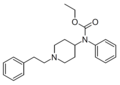 Fentanyl-carbamate structure

