Friuli-Venezia Giulia: Difference between revisions
CSV import |
CSV import |
||
| Line 20: | Line 20: | ||
{{Italy-stub}} | {{Italy-stub}} | ||
{{food-stub}} | {{food-stub}} | ||
== Friuli-Venezia Giulia gallery == | |||
<gallery> | |||
File:CoA of Friuli-Venezia Giulia.svg|CoA of Friuli-Venezia Giulia | |||
File:Foro romano di Aquileia.jpg|Foro romano di Aquileia | |||
File:Miramare2.jpg|Miramare | |||
File:Culino, part of the Forni Avoltri municipality, in Friuli, Italy.jpg|Culino, part of the Forni Avoltri municipality, in Friuli, Italy | |||
File:Laguna di Grado 02.jpg|Laguna di Grado | |||
File:Lignano faro.jpg|Lignano faro | |||
File:Porttrieste old.jpg|Port of Trieste | |||
File:Unioni territoriali intercomunali del Friuli-Venezia Giulia.png|Unioni territoriali intercomunali del Friuli-Venezia Giulia | |||
File:Trieste (28947281422).jpg|Trieste | |||
</gallery> | |||
Latest revision as of 17:51, 3 March 2025
Friuli-Venezia Giulia is one of the 20 regions of Italy, located in the northeastern part of the country. It is one of five autonomous regions with special statute. The region spans an area of 7,858 square kilometers and has a population of approximately 1.2 million inhabitants. The regional capital is Trieste.
Geography[edit]
Friuli-Venezia Giulia is bordered by the Adriatic Sea to the south, Austria to the north, Slovenia to the east, and the Italian region of Veneto to the west. The region is predominantly mountainous, with the Alps and the Dolomites covering a significant portion of its territory. The region also includes a wide plain and a coastline along the Adriatic Sea.
History[edit]
The region has a rich and complex history, having been inhabited since prehistoric times. It was part of the Roman Empire, and later fell under the control of various powers, including the Byzantine Empire, the Republic of Venice, and the Habsburg Monarchy. After World War I, the region became part of Italy.
Culture[edit]
Friuli-Venezia Giulia is known for its diverse cultural heritage, which reflects its complex history and geographical location. The region is home to a mix of Italian, Slovene, Austrian, and Friulian cultures. The region's cultural richness is evident in its architecture, literature, music, and cuisine.
Cuisine[edit]
The cuisine of Friuli-Venezia Giulia is diverse and unique, reflecting the region's cultural mix. It includes dishes such as Frico, a cheese and potato dish, and Gubana, a traditional pastry. The region is also known for its wines, including the white wines of Collio Goriziano and the red wines of Colli Orientali del Friuli.
Economy[edit]
The economy of Friuli-Venezia Giulia is diverse, with sectors such as industry, agriculture, and services contributing significantly. The region is known for its production of wines, cheeses, and hams. It also has a strong industrial sector, with companies in fields such as shipbuilding, furniture manufacturing, and electronics.


Friuli-Venezia Giulia gallery[edit]
-
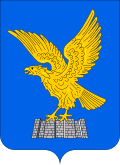 CoA of Friuli-Venezia Giulia
 -
 Foro romano di Aquileia
 -
Miramare
-
Culino, part of the Forni Avoltri municipality, in Friuli, Italy
-
Laguna di Grado
-
Lignano faro
-
Port of Trieste
-
Unioni territoriali intercomunali del Friuli-Venezia Giulia
-
Trieste


.jpg)