Religious war: Difference between revisions
CSV import |
CSV import |
||
| Line 38: | Line 38: | ||
{{Religion-stub}} | {{Religion-stub}} | ||
<gallery> | |||
File:Saladin and Guy.jpg|Saladin and Guy | |||
File:Regaining the Provincial Capital of Ruizhou.jpg|Regaining the Provincial Capital of Ruizhou | |||
File:La masacre de San Bartolomé, por François Dubois.jpg|La masacre de San Bartolomé, por François Dubois | |||
File:Tissot The Women of Midian Led Captive by the Hebrews.jpg|The Women of Midian Led Captive by the Hebrews | |||
File:Cantigas battle.jpg|Cantigas battle | |||
File:HolyRomanEmpire 1618.png|Holy Roman Empire 1618 | |||
File:Map of Ethiopia circa 1540.png|Map of Ethiopia circa 1540 | |||
File:Francesco Podesti (1800-1895) - Ο Θάνατος του Σπύρου Δαγλιόστρου, π. 1831.jpg|Ο Θάνατος του Σπύρου Δαγλιόστρου, π. 1831 | |||
File:Flickr - Government Press Office (GPO) - Arab People fleeing.jpg|Arab People fleeing | |||
File:Temple Mount (Aerial view, 2007) 05.jpg|Temple Mount (Aerial view, 2007) | |||
</gallery> | |||
Revision as of 05:49, 3 March 2025
Religious war is a conflict primarily caused or justified by differences in religion. Throughout history, religious wars have been fought across the globe, from the Crusades in the Middle East to the European Wars of Religion. The impact of these wars has been profound, shaping political boundaries, influencing social structures, and altering the course of civilizations.
Definition and Characteristics
A religious war is characterized by the mobilization of troops, resources, and propaganda with the primary aim of advancing a religious cause. This type of conflict often involves a sense of divine mission or spiritual duty among the participants. While the actual reasons behind wars are complex and multifaceted, including political, economic, and social factors, religious wars are distinguished by the prominent role that religious ideology plays in their instigation and perpetuation.
Historical Examples
The Crusades (1096–1291) are among the most well-known examples of religious wars. Initiated by the Christian states of Europe, the Crusades aimed to recapture the Holy Land from Muslim control. Another significant period of religious conflict was the European Wars of Religion (1524–1648), which included events such as the Thirty Years' War. These wars were primarily fought in Central Europe and involved Catholic and Protestant states.
In more recent history, the Partition of India in 1947, which led to the creation of the Islamic Republic of Pakistan and the Republic of India, was marked by widespread communal violence between Hindus, Muslims, and Sikhs. The Bosnian War (1992–1995), part of the breakup of Yugoslavia, also had a significant religious component, involving Orthodox Christians, Muslims, and Catholics.
Causes
The causes of religious wars are varied and often intertwined with ethnic, economic, and political issues. Key factors include:
- Religious Zeal: A fervent desire to spread or defend one's faith can lead to conflict, especially when combined with a belief in the righteousness of one's cause.
- Political Power: Leaders may use religion as a tool to consolidate or expand their power, often leading to conflict with other groups.
- Economic Gain: Control over resources and trade routes can be a significant motivator for religious wars, with religious justification providing a means to rally support.
- Social and Ethnic Tensions: Religious differences can exacerbate existing social and ethnic divisions, leading to conflict.
Impact
The impact of religious wars has been significant and long-lasting. They have led to the redrawing of political boundaries, the displacement of populations, and profound social and economic changes. Additionally, religious wars have often resulted in significant loss of life and the destruction of cultural heritage.
Contemporary Issues
In the contemporary world, religious conflicts continue to be a source of violence and tension in many regions. The rise of religious extremism and terrorism has brought new attention to the potential for religion to be used as a justification for violence. Efforts to promote interfaith dialogue and understanding are seen as key strategies in preventing religious conflicts.
See Also
References
<references group="" responsive="1"></references>

-
Saladin and Guy
-
 Regaining the Provincial Capital of Ruizhou
 -
 La masacre de San Bartolomé, por François Dubois
 -
 The Women of Midian Led Captive by the Hebrews
 -
 Cantigas battle
 -
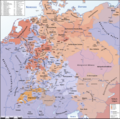 Holy Roman Empire 1618
 -
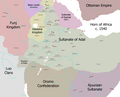 Map of Ethiopia circa 1540
 -
 Ο Θάνατος του Σπύρου Δαγλιόστρου, π. 1831
 -
 Arab People fleeing
 -
 Temple Mount (Aerial view, 2007)


_-_%CE%9F_%CE%98%CE%AC%CE%BD%CE%B1%CF%84%CE%BF%CF%82_%CF%84%CE%BF%CF%85_%CE%A3%CF%80%CF%8D%CF%81%CE%BF%CF%85_%CE%94%CE%B1%CE%B3%CE%BB%CE%B9%CF%8C%CF%83%CF%84%CF%81%CE%BF%CF%85,_%CF%80._1831.jpg)
_-_Arab_People_fleeing.jpg)
_05.jpg)

