Petrarch: Difference between revisions
CSV import Tags: mobile edit mobile web edit |
CSV import |
||
| Line 26: | Line 26: | ||
{{Italy-bio-stub}} | {{Italy-bio-stub}} | ||
{{poet-stub}} | {{poet-stub}} | ||
<gallery> | |||
File:Altichiero, ritratto di Francesco Petrarca.jpg|Portrait of Francesco Petrarca by Altichiero | |||
File:Arezzo Campanile - Santa Maria della Pieve.jpg|Arezzo Campanile - Santa Maria della Pieve | |||
File:Arezzo-Casa di Francesco Petrarca.JPG|Casa di Francesco Petrarca in Arezzo | |||
File:140608 Mont-Ventoux-04.jpg|Mont Ventoux | |||
File:Arquà Petrarca Punto di vista di un'aquila.jpg|Arquà Petrarca - Eagle's viewpoint | |||
File:Bundesarchiv Bild 183-1985-0819-019, Handschrift, Francesco Petrarca.jpg|Manuscript of Francesco Petrarca | |||
File:Simone Martini - Frontispice du Virgile.jpg|Frontispiece of Virgil by Simone Martini | |||
File:The Triumph of Death, or The Three Fates.jpg|The Triumph of Death, or The Three Fates | |||
File:Thorvaldsen Cicero.jpg|Thorvaldsen's Cicero | |||
File:Francesco Petrarca01.jpg|Francesco Petrarca | |||
</gallery> | |||
Latest revision as of 05:36, 3 March 2025
Petrarch (or Francesco Petrarca) (July 20, 1304 – July 19, 1374) was an Italian scholar, poet and one of the earliest humanists. Petrarch is often called the "Father of Humanism".
Life[edit]
Born in Arezzo, Tuscany, Petrarch spent his early childhood in the village of Incisa, near Florence. He spent much of his early life at Avignon and nearby Carpentras, where his family moved to follow Pope Clement V who moved there in 1309 to begin the Avignon Papacy.
Works[edit]
Petrarch's earliest work was writing in Latin. His Latin writings include scholarly works, introspective essays, letters, and more poetry. He is best known for his Italian poetry, notably the Canzoniere and the Trionfi. The Canzoniere, also known as the Rime Sparse, but originally titled Rerum vulgarium fragmenta, is a collection of poems by Petrarch.
Legacy[edit]
Petrarch's influence is evident in the works of many, including Chaucer and Shakespeare. His sonnets were admired and imitated throughout Europe during the Renaissance and became a model for lyrical poetry.
See also[edit]
References[edit]
<references />
External links[edit]

-
 Portrait of Francesco Petrarca by Altichiero
 -
 Arezzo Campanile - Santa Maria della Pieve
 -
 Casa di Francesco Petrarca in Arezzo
 -
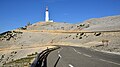 Mont Ventoux
 -
 Arquà Petrarca - Eagle's viewpoint
 -
 Manuscript of Francesco Petrarca
 -
 Frontispiece of Virgil by Simone Martini
 -
 The Triumph of Death, or The Three Fates
 -
 Thorvaldsen's Cicero
 -
 Francesco Petrarca


