Gastric emptying study: Difference between revisions
CSV import |
CSV import |
||
| Line 24: | Line 24: | ||
{{Gastroenterology-stub}} | {{Gastroenterology-stub}} | ||
{{No image}} | {{No image}} | ||
<gallery> | |||
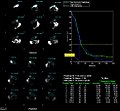
File:GastricEmptying.jpg|Gastric Emptying | |||
</gallery> | |||
Revision as of 05:12, 3 March 2025
Gastric emptying study is a medical diagnostic procedure used to evaluate gastric emptying of solids and liquids. It is a type of nuclear medicine study that involves the use of radioactive isotopes to measure the rate at which food leaves the stomach and enters the small intestine.
Procedure
The patient consumes a meal that contains a small amount of a radioactive substance, usually a type of technetium. The radiation emitted by this substance is detected by a gamma camera, which takes a series of images over several hours. These images are used to calculate the rate of gastric emptying.
Indications
A gastric emptying study may be ordered for patients who have symptoms suggestive of gastroparesis, such as nausea, vomiting, bloating, early satiety, and abdominal pain. It can also be used to evaluate the effectiveness of treatments for these conditions.
Interpretation
The rate of gastric emptying is calculated based on the amount of radioactive substance that remains in the stomach at various time points after the meal. A delay in gastric emptying is suggestive of gastroparesis.
Risks
The risks of a gastric emptying study are minimal. The amount of radiation exposure is low and similar to that of other nuclear medicine studies. There may be a small risk of an allergic reaction to the radioactive substance.
See also


This article is a gastroenterology stub. You can help WikiMD by expanding it!
-
 Gastric Emptying

