Galicia (Spain): Difference between revisions
CSV import |
CSV import |
||
| Line 20: | Line 20: | ||
{{Spain-stub}} | {{Spain-stub}} | ||
{{food-stub}} | {{food-stub}} | ||
<gallery> | |||
File:Location of Galicia.png|Location of Galicia | |||
File:Coat of Arms of Galicia (Spain).svg|Coat of Arms of Galicia | |||
File:Galicia in Spain (plus Canarias).svg|Galicia in Spain (plus Canarias) | |||
File:Land of Galicia, NASA satellite image.jpg|Land of Galicia, NASA satellite image | |||
File:Casco Leiro.jpg|Casco Leiro | |||
File:Pallozas nevadas, O Cebreiro.jpg|Pallozas nevadas, O Cebreiro | |||
File:Castro de Baroña y playa de Arealonga-Complexo Húmido de Corrubedo-Coruña-Spain.jpg|Castro de Baroña y playa de Arealonga | |||
File:Galician warrior head.JPG|Galician warrior head | |||
File:Cvp-00791-109v.jpg|Cvp-00791-109v | |||
File:Apóstoles del Pórtico de la Gloria.jpg|Apóstoles del Pórtico de la Gloria | |||
</gallery> | |||
Latest revision as of 05:10, 3 March 2025
Galicia is an autonomous community in northwest Spain, bordered by Portugal to the south, the Spanish autonomous communities of Castile and León and Asturias to the east, the Atlantic Ocean to the west, and the Bay of Biscay to the north. It is one of the historical nationalities recognized by the Spanish Constitution.
History[edit]
Galicia's history dates back to pre-Roman times. The region was first inhabited by the Celts, who left a strong cultural footprint still visible today in the Gallaeci people. The Romans arrived in the 2nd century BC, establishing important settlements in Lugo, Ourense and Santiago de Compostela.
Geography[edit]
Galicia is characterized by its hilly landscape, with the highest point being the Pena Trevinca at 2,127 meters. The region is also known for its rugged coastline, featuring numerous Rías, or estuaries, and the Cíes Islands, part of the Atlantic Islands of Galicia National Park.
Economy[edit]
The economy of Galicia is characterized by a mix of traditional and modern industries. The region is known for its fishing industry, which is one of the most productive in Europe. Other important sectors include textiles, automotive, and tourism.
Culture[edit]
Galicia has a rich cultural heritage, with its own distinct Galician language and traditions. The region is famous for its bagpipe music and the Way of St. James, a pilgrimage route ending in Santiago de Compostela.
Cuisine[edit]
Galician cuisine is renowned for its quality and variety. Signature dishes include pulpo a la gallega (octopus with paprika), empanada gallega (a type of pie), and caldo gallego (a hearty soup). The region is also known for its excellent seafood and Albariño white wine.


-
 Location of Galicia
 -
 Coat of Arms of Galicia
 -
 Galicia in Spain (plus Canarias)
 -
 Land of Galicia, NASA satellite image
 -
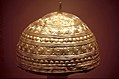 Casco Leiro
 -
 Pallozas nevadas, O Cebreiro
 -
 Castro de Baroña y playa de Arealonga
 -
 Galician warrior head
 -
 Cvp-00791-109v
 -
 Apóstoles del Pórtico de la Gloria

.svg)
.svg)


