Septentrional: Difference between revisions
CSV import |
CSV import |
||
| Line 30: | Line 30: | ||
{{Literature-stub}} | {{Literature-stub}} | ||
{{Science-stub}} | {{Science-stub}} | ||
<gallery> | |||
File:Mallet miniature map France 1687.jpg|Mallet miniature map France 1687 | |||
File:Ursa Major constellation detail map.PNG|Ursa Major constellation detail map | |||
File:Hémisphère septentrional pour voir plus distinctoment les terres arctiques 11-c.130-1740.png|Hémisphère septentrional pour voir plus distinctoment les terres arctiques | |||
File:Ca. 1720 chart of the constellations of the Northern Hemisphere.jpg|Ca. 1720 chart of the constellations of the Northern Hemisphere | |||
</gallery> | |||
Latest revision as of 04:58, 3 March 2025
Septentrional refers to a term that is often used in various contexts to denote something related to the north or northern regions. The term is derived from the Latin word "septentrionalis," which itself comes from "septentriones," meaning "the seven plow oxen," a reference to the seven stars of the Big Dipper which point towards the North Star. In geography, literature, and science, "septentrional" is utilized to describe phenomena, locations, and cultures associated with the northern parts of the Earth.
Etymology and Usage[edit]
The word "septentrional" has its roots in Latin, with "septentriones" being used by the Romans to denote the northern constellations. This term was metaphorically linked to the north direction, and over time, "septentrional" evolved to describe anything pertaining to the north. In modern usage, it is less common than its counterpart "northern" but still appears in academic, literary, and certain specialized contexts.
Geographical Significance[edit]
In geography, "septentrional" is used to describe features and regions located in the northern part of the world. This can range from natural phenomena such as the Aurora Borealis (Northern Lights) to specific areas like the Septentrional mountain range in the Dominican Republic. The term helps in distinguishing between the characteristics and climatic conditions of the northern hemisphere compared to the southern.
Cultural and Historical Aspects[edit]
Culturally, "septentrional" can refer to the traditions, languages, and histories of peoples living in northern regions. For example, the Vikings and other Nordic cultures are often subjects of study under the umbrella of septentrional research in history and anthropology. This term encapsulates not only the geographical location of these cultures but also their unique relationship with the environment and how it has shaped their development over time.
In Literature[edit]
Literary works sometimes use "septentrional" to evoke imagery or themes related to the north. This can be seen in descriptions of stark, cold landscapes or in narratives that explore the isolation and beauty of northern settings. The term adds a layer of specificity and atmosphere, distinguishing these northern locales from more generic settings.
Scientific Usage[edit]
In science, particularly in fields like meteorology and astronomy, "septentrional" is used to describe phenomena that occur in or are related to the northern hemisphere. For example, septentrional winds are those that originate from the north. In astronomy, the term can refer to features observed in the northern celestial hemisphere.
Conclusion[edit]
While "septentrional" may not be as commonly used as "northern," it serves as a more specific and sometimes poetic term for describing anything related to the north. Its usage across various disciplines highlights the diverse ways in which humanity interacts with and conceptualizes the northern parts of our world.


This article is a literature-related stub. You can help WikiMD by expanding it!

-
 Mallet miniature map France 1687
 -
 Ursa Major constellation detail map
 -
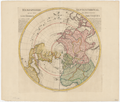 Hémisphère septentrional pour voir plus distinctoment les terres arctiques
 -
 Ca. 1720 chart of the constellations of the Northern Hemisphere


