Diospyros blancoi: Difference between revisions
CSV import |
CSV import Tags: mobile edit mobile web edit |
||
| Line 21: | Line 21: | ||
{{food-stub}} | {{food-stub}} | ||
<gallery> | |||
File:Diospyros_discolor_(velvet_apple,_velvet_persimmon_or_mabolo_tree)_of_Bangladesh_02.jpg|Diospyros discolor (velvet apple, velvet persimmon or mabolo tree) of Bangladesh | |||
File:Velvet_apple_(Diospyros_discolor).jpg|Velvet apple (Diospyros discolor) | |||
File:Velvet_apple_(sliced).jpg|Velvet apple (sliced) | |||
File:Velvet_apple_(Diospyros_discolor)_seeds.jpg|Velvet apple (Diospyros discolor) seeds | |||
File:Mabolo_(Diospyros_blancoi)_fruit.jpg|Mabolo (Diospyros blancoi) fruit | |||
File:Kamagong_(Ironwood)_Chair.jpg|Kamagong (Ironwood) Chair | |||
</gallery> | |||
Latest revision as of 12:03, 25 February 2025

Diospyros blancoi, commonly known as the Mabolo or Velvet Apple, is a tropical tree of the family Ebenaceae. It is native to the Philippines and is also found in other parts of Southeast Asia. The tree is notable for its distinctive velvety skin and sweet, creamy flesh, which has made it a favored fruit in its native range. Despite its appealing taste, the fruit has a strong, cheese-like odor when ripe, which can be off-putting to some. Diospyros blancoi is not only valued for its fruit but also for its timber, which is hard and durable, making it suitable for various construction and furniture-making purposes.
Description[edit]
Diospyros blancoi is a medium-sized tree that can grow up to 20 meters in height. It has a straight trunk, with a dark brown to almost black bark. The leaves are simple, oblong, and glossy, with a leathery texture. The flowers of the tree are small and inconspicuous, with male and female flowers typically found on separate trees (dioecious). The fruit is a large berry, typically 7-10 cm in diameter, with a smooth, velvety skin that ranges in color from bright red to purple. The flesh of the fruit is soft, creamy, and pinkish-orange, containing a few large seeds.
Cultivation[edit]
Diospyros blancoi thrives in tropical climates and is often cultivated in orchards and home gardens in the Philippines and other Southeast Asian countries. It prefers well-drained, fertile soil and requires regular watering during the dry season. The tree is relatively low-maintenance once established. Propagation is usually through seeds, although grafting methods are also employed to produce clones of desirable cultivars. The tree begins to bear fruit after 4-5 years.
Uses[edit]
The primary use of Diospyros blancoi is for its fruit, which is eaten fresh or used in various culinary preparations. Despite its odor, the fruit is considered a delicacy in many cultures and is often eaten with salt or used in salads and desserts. The wood of the tree is also highly valued, known for its strength and resistance to wear, making it suitable for high-quality furniture, flooring, and construction.
Cultural Significance[edit]
In the Philippines, the Mabolo tree holds cultural significance and is often associated with fertility and prosperity. It is commonly planted in home gardens and orchards, serving as a symbol of abundance.
Conservation[edit]
While Diospyros blancoi is not currently listed as endangered, its habitat is threatened by deforestation and urbanization. Efforts are being made in some areas to conserve and promote the cultivation of this species, both for its environmental benefits and economic potential.

-
 Diospyros discolor (velvet apple, velvet persimmon or mabolo tree) of Bangladesh
 -
 Velvet apple (Diospyros discolor)
 -
 Velvet apple (sliced)
 -
 Velvet apple (Diospyros discolor) seeds
 -
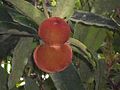 Mabolo (Diospyros blancoi) fruit
 -
 Kamagong (Ironwood) Chair
_of_Bangladesh_02.jpg)
.jpg)
.jpg)
_seeds.jpg)
_fruit.jpg)
_Chair.jpg)
