Po (food): Difference between revisions
CSV import |
CSV import |
||
| Line 31: | Line 31: | ||
File:Hanu-yukpo_3.jpg | File:Hanu-yukpo_3.jpg | ||
File:Bugeo-po.jpg | File:Bugeo-po.jpg | ||
</gallery> | |||
<gallery> | |||
File:Hanu-yukpo_3.jpg|Hanu-yukpo | |||
File:Bugeo-po.jpg|Bugeo-po | |||
</gallery> | </gallery> | ||
Revision as of 11:16, 25 February 2025
Po is a traditional Korean food that refers to a variety of dried, preserved ingredients. The most common type of po is gim, or dried seaweed, but the term can also refer to dried fruits, vegetables, and meats.
History
The practice of drying food for preservation dates back to the Three Kingdoms period (57 BC – 668 AD). The first recorded mention of po is in the Samguk Sagi, a historical record of the Three Kingdoms of Korea, which mentions dried meat being used as a military ration.
Preparation
The preparation of po involves several steps. First, the ingredient is cleaned and cut into thin slices. Then, it is dried in the sun or in a dehydrator. The drying process can take several days, depending on the ingredient and the weather conditions. Once the ingredient is fully dried, it can be stored for long periods of time without spoiling.
Types of Po
There are many types of po, each with its own unique flavor and texture. Some of the most common types include:
- Gim: Dried seaweed, often used in dishes like gimbap and bibimbap.
- Yukpo: Dried beef, similar to beef jerky.
- Gwailpo: Dried fruit, such as persimmons or apricots.
- Chaepo: Dried vegetables, such as radishes or carrots.
Cultural Significance
Po is an important part of Korean culture and cuisine. It is often used in traditional Korean dishes, and is also a popular snack. In addition, po is often given as a gift during holidays and special occasions.
See Also


-
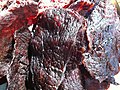 Hanu-yukpo
 -
 Bugeo-po
