Avermectin: Difference between revisions
CSV import |
CSV import |
||
| Line 38: | Line 38: | ||
[[Category:World Health Organization essential medicines]] | [[Category:World Health Organization essential medicines]] | ||
[[Category:Nobel Prize in Physiology or Medicine]] | [[Category:Nobel Prize in Physiology or Medicine]] | ||
<gallery> | |||
File:Avermectins_skeletal.svg|Avermectins skeletal structure | |||
File:Avermectin_Biosynthesis_Pathway.png|Avermectin Biosynthesis Pathway | |||
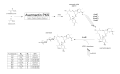
File:Avermectin_PKS.png|Avermectin PKS | |||
</gallery> | |||
Latest revision as of 23:48, 24 February 2025
Avermectin is a series of drugs and pesticides used to treat parasitic worms and insects. They are naturally occurring compounds derived from the soil bacterium Streptomyces avermitilis. Avermectin contains eight closely related components, the most important of which are Avermectin B1a and Avermectin B1b.
History[edit]
Avermectin was discovered in 1975 by Satoshi Ōmura and William C. Campbell, who were later awarded the Nobel Prize in Physiology or Medicine in 2015 for their work on this class of compounds. The discovery of Avermectin and its derivatives has significantly reduced the incidence of river blindness and lymphatic filariasis, as well as showing efficacy against an expanding number of other parasitic diseases.
Uses[edit]
Avermectin and its derivatives, such as Ivermectin, are used in both human and veterinary medicine to treat a variety of parasitic infections. These include river blindness, elephantiasis, and scabies. In agriculture, they are used as insecticides and antihelminthics.
Mechanism of Action[edit]
Avermectin works by binding to glutamate-gated chloride channels in the nerve and muscle cells of invertebrates. This leads to an increase in the permeability of the cell membrane to chloride ions, resulting in paralysis and death of the parasite.
Safety and Side Effects[edit]
While generally considered safe, Avermectin and its derivatives can cause side effects in some individuals. These can include skin rash, nausea, vomiting, diarrhea, stomach pain, facial or limb swelling, neurologic adverse events, and sudden worsening of condition.
Resistance[edit]
Resistance to Avermectin has been reported in some parasites, particularly in those affecting livestock. This is a significant concern as it could potentially limit the effectiveness of this important class of drugs.
See Also[edit]


-
 Avermectins skeletal structure
 -
 Avermectin Biosynthesis Pathway
 -
 Avermectin PKS


