Cơm nắm: Difference between revisions
CSV import Tags: mobile edit mobile web edit |
CSV import |
||
| Line 30: | Line 30: | ||
{{Vietnamese-cuisine-stub}} | {{Vietnamese-cuisine-stub}} | ||
{{food-stub}} | {{food-stub}} | ||
<gallery> | |||
File:Rice_balls_to_freeze.jpg|Rice balls to freeze | |||
</gallery> | |||
Latest revision as of 21:36, 20 February 2025
Cơm nắm is a traditional Vietnamese dish, often referred to as "rice balls" in English. It is a popular street food in Vietnam, particularly in the southern regions of the country. The dish is made from glutinous rice, which is cooked and then shaped into small, compact balls. These rice balls are typically served with a variety of accompaniments, such as pickled vegetables, grilled meat, and nuoc cham, a traditional Vietnamese dipping sauce.
History[edit]
The origins of cơm nắm are not well-documented, but it is believed to have been a staple food in Vietnam for centuries. The dish is often associated with the Tet holiday, when it is traditionally made and shared among family and friends.
Preparation[edit]
To prepare cơm nắm, glutinous rice is first soaked overnight and then cooked until it is sticky and tender. The cooked rice is then shaped into small balls, typically using a mold or by hand. The rice balls are then served with a variety of accompaniments, which can vary depending on personal preference and regional variations. Common accompaniments include pickled vegetables, grilled meat, and nuoc cham.
Variations[edit]
There are many variations of cơm nắm throughout Vietnam. In the north, the dish is often served with mung bean paste and sesame seeds, while in the south, it is typically served with grilled meat and pickled vegetables. Some versions of the dish also include dried shrimp or pork.
Cultural Significance[edit]
Cơm nắm is not only a popular street food in Vietnam, but it also holds cultural significance. The dish is often associated with the Tet holiday, when it is traditionally made and shared among family and friends. It is also commonly served at festivals and other special occasions.
See Also[edit]


-
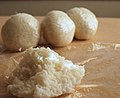 Rice balls to freeze

