Kue kochi: Difference between revisions
CSV import |
CSV import |
||
| Line 20: | Line 20: | ||
{{food-stub}} | {{food-stub}} | ||
{{No image}} | {{No image}} | ||
<gallery> | |||
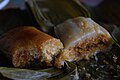
File:Kuih_Kochi.jpg|Kuih Kochi | |||
</gallery> | |||
Revision as of 21:28, 20 February 2025
Kue Kochi is a traditional Indonesian dessert, specifically from the regions of Java and Bali. It is a type of kue, or Indonesian cake, that is made from glutinous rice flour, filled with sweetened grated coconut, and wrapped in banana leaves before being steamed.
Ingredients and Preparation
The main ingredients of Kue Kochi are glutinous rice flour, grated coconut, and palm sugar. The dough is made by mixing the glutinous rice flour with water and a pinch of salt. The filling is made by cooking the grated coconut with palm sugar until it becomes a thick, sweet paste. The dough is then filled with the coconut paste and shaped into a pyramid. The pyramid is then wrapped in a banana leaf and secured with a toothpick or string. The wrapped cakes are then steamed until they are cooked through.
Cultural Significance
Kue Kochi is often served during traditional Indonesian celebrations and ceremonies, such as weddings, birthdays, and religious holidays. It is also a popular snack and dessert in Indonesia, and can be found in many local markets and street food stalls.
Variations
There are several variations of Kue Kochi, depending on the region. Some versions use different types of fillings, such as jackfruit, durian, or mung bean paste. Others use different types of flour, such as rice flour or tapioca flour, to make the dough. There are also variations in the shape and size of the cake, as well as the type of leaf used for wrapping.
See Also

This article is a Indonesian cuisine-related stub. You can help WikiMD by expanding it!

-
 Kuih Kochi

