Roter Veltliner: Difference between revisions
CSV import Tags: mobile edit mobile web edit |
CSV import |
||
| Line 29: | Line 29: | ||
{{wine-stub}} | {{wine-stub}} | ||
{{food-stub}} | {{food-stub}} | ||
<gallery> | |||
File:Veltliner_Rot_DSC_4578.JPG|Roter Veltliner | |||
</gallery> | |||
Latest revision as of 21:26, 20 February 2025
Roter Veltliner is a white wine grape variety that is primarily grown in the Wachau region of Austria. Despite its name, it is not a color mutation of the Grüner Veltliner grape, but a distinct variety in its own right.
History[edit]
The origins of Roter Veltliner are not well documented, but it is believed to have been cultivated in Austria for several centuries. It was once a dominant grape variety in the Wachau region, but its plantings have declined in recent years due to the increasing popularity of Grüner Veltliner and Riesling.
Viticulture and winemaking[edit]
Roter Veltliner is a late-ripening grape that requires a warm climate to fully mature. It is resistant to many common vine diseases, but is susceptible to botrytis and powdery mildew. The grape produces wines with high acidity and complex flavors, often with notes of apple, pear, and spice.
In the winery, Roter Veltliner is often vinified in stainless steel tanks to preserve its fresh fruit flavors. Some producers also age the wine in oak barrels to add complexity and structure.
Wine styles[edit]
Roter Veltliner wines can range from light and crisp to full-bodied and rich, depending on the ripeness of the grapes and the winemaking techniques used. The best examples often have a good balance of fruit, acidity, and minerality, and can age well for several years.
Food pairing[edit]
Due to its high acidity and complex flavors, Roter Veltliner pairs well with a variety of foods. It is particularly good with seafood, poultry, and light pasta dishes. It can also be enjoyed on its own as an aperitif.
See also[edit]


-
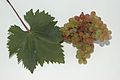 Roter Veltliner

