Tea production in Rwanda: Difference between revisions
CSV import |
CSV import |
||
| Line 22: | Line 22: | ||
{{Agriculture-stub}} | {{Agriculture-stub}} | ||
{{food-stub}} | {{food-stub}} | ||
== Tea production in Rwanda == | |||
<gallery> | |||
File:Kivu_lake_view_from_Rutsiro_tea_plantations.jpg|Kivu lake view from Rutsiro tea plantations | |||
File:Rustiro_tea_plantations.jpg|Rustiro tea plantations | |||
File:Orthodox_variety_from_Rutsiro_tea_factory.jpg|Orthodox variety from Rutsiro tea factory | |||
File:Rutsiro_tea_factory_early_child_development_center.jpg|Rutsiro tea factory early child development center | |||
</gallery> | |||
Latest revision as of 21:26, 20 February 2025
Tea Production in Rwanda is a significant part of the country's economy and agricultural output. Rwanda, a small landlocked country in East Africa, has a predominantly rural population engaged in subsistence agriculture. However, tea, along with coffee, is one of the major cash crops for export.
History[edit]
The history of tea production in Rwanda dates back to the 1950s when the first tea plants were introduced by European settlers. The industry has since grown, with the country now being one of the largest tea producers in Africa.
Geography and Climate[edit]
Rwanda's geography and climate are well-suited for tea production. The country's high altitude, volcanic soil, and frequent rainfall provide ideal conditions for growing tea. The majority of tea plantations are located in the highland areas of the country, particularly in the districts of Byumba, Ruhengeri, and Cyangugu.
Production Process[edit]
The process of tea production in Rwanda involves several stages, from planting to harvesting, processing, and packaging. The tea leaves are hand-picked, with only the top two leaves and the bud being plucked. After plucking, the leaves are transported to the factory where they are withered, rolled, fermented, dried, and finally sorted and packed.
Economic Impact[edit]
Tea production plays a crucial role in Rwanda's economy. It is one of the country's top foreign exchange earners, contributing significantly to its GDP. The industry also provides employment to thousands of Rwandans, particularly in rural areas.
Challenges and Future Prospects[edit]
Despite its success, the tea industry in Rwanda faces several challenges. These include climate change, which threatens the country's favorable tea-growing conditions, and market fluctuations, which can affect the price of tea on the international market. However, the future prospects for the industry remain positive, with ongoing efforts to improve tea quality and increase production.


This article is a agriculture stub. You can help WikiMD by expanding it!

Tea production in Rwanda[edit]
-
 Kivu lake view from Rutsiro tea plantations
 -
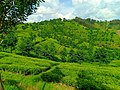 Rustiro tea plantations
 -
 Orthodox variety from Rutsiro tea factory
 -
 Rutsiro tea factory early child development center


