Ground biscuit: Difference between revisions
CSV import |
CSV import |
||
| Line 31: | Line 31: | ||
{{food-stub}} | {{food-stub}} | ||
{{No image}} | {{No image}} | ||
<gallery> | |||
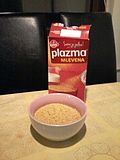
File:Plazma_ground_biscuits.jpg|Plazma ground biscuits | |||
</gallery> | |||
Revision as of 21:22, 20 February 2025
Ground biscuit is a type of biscuit that has been crushed or ground into a fine powder. It is often used as a base for various desserts, such as cheesecakes and pie crusts, or as a thickening agent in sauces and gravys.
History
The use of ground biscuit dates back to ancient times. The Romans were known to use ground biscuits in their cooking, and the practice has continued throughout history in various cultures. In the Middle Ages, ground biscuit was often used as a thickening agent in stews and soups.
Preparation
To prepare ground biscuit, whole biscuits are typically placed in a food processor or blender and processed until they reach a fine, sandy texture. Alternatively, biscuits can be placed in a sealed plastic bag and crushed with a rolling pin or other heavy object.
Uses
Ground biscuit is a versatile ingredient that can be used in a variety of dishes. It is most commonly used as a base for desserts such as cheesecakes and pies. The biscuits are mixed with melted butter and pressed into a pan to form a crust. Ground biscuit can also be used as a thickening agent in sauces and gravies, or as a coating for fried foods.
Varieties
There are many different types of biscuits that can be used to make ground biscuit, each with their own unique flavor and texture. Some of the most popular types include digestive biscuits, graham crackers, and shortbread biscuits.
See also

-
 Plazma ground biscuits

